CADJPY
CADJPY is one of the most popular trading instruments among traders who actively use fundamental analysis. Due to its 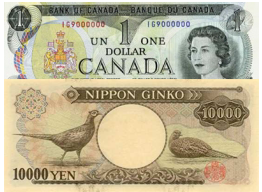 unique characteristics, CADJPY is considered the least predictable instrument for traders who use technical analysis.
Sudden daily price fluctuations of 150-250 pips are considered normal for this instrument, as it reacts strongly to economic indicators, foreign policy activities, and key news releases from strategic partner countries.
CADJPY is considered an exotic currency pair because the high commissions for trading this instrument simply weed out traders who take short positions, as well as scalpers and pipsers.
The average spread for CADJPY ranges from 7 to 15 pips across various brokers, so if you decide to trade CADJPY, I recommend carefully selecting your broker.
JPY – the Japanese yen – is the national currency of Japan. The Japanese yen is considered one of the most popular currencies in Asia, and Japan itself is the largest exporter of computers and home appliances. It's worth remembering that Japan is the world's largest producer of compact cars and hybrids, which, due to rising gasoline prices, have quietly begun to push large, high-priced cars out of the European and American markets.
Therefore, the Japanese yen is sensitive to news related to automotive exports, as well as rising component prices. Now, let's look at some fundamental factors to pay attention to:
1. The Bank of Japan press conference is one of the strongest news factors moving the yen. This conference discusses economic growth prospects, future inflation, and interest rate. Japan is actively undervaluing its currency to make its products competitive, so monitoring data on possible interest rate changes is a key task for traders.
2. Japan's industrial production is a strong indicator that also influences the JPY exchange rate, since, as mentioned above, Japan's economy is heavily tied to industry.
3. GDP data.
It's important to remember that the JPY reacts to changes in the US dollar exchange rate, since the two countries have close economic ties.
CAD is the national currency of Canada. Canada is one of the largest oil exporters, although its own economy does not consume much oil. Its key oil trading partner is the US, so the CAD is highly dependent on global oil prices and the solvency of the US, and therefore on the dollar.
If the price of oil rises, the value of the CAD also rises, and therefore the CADJPY currency pair rises. A fall in oil prices always negatively affects the CAD, so when oil prices fall, the national currency weakens and the CADJPY chart tends to fall. In addition to oil prices, when analyzing the Canadian dollar, it's worth paying attention to the following fundamental indicators:
1. Canada's Gross Domestic Product – an important indicator of economic development, updated monthly. It's important to closely monitor changes in GDP, as they have a very strong impact on exchange rate movements.
2. The Consumer Price Index – shows changes in inflation in Canada.
3. Employment and unemployment data.
In conclusion, I'd like to note that the CADJPY currency pair is heavily influenced by the dollar, as well as gold and energy prices. It's important to remember that strong price spikes are normal for the CADJPY, so I don't recommend this pair for beginners who only have technical analysis.