When will the war in Ukraine end: a probabilistic forecast by year
When investing, it's important to consider geopolitical factors, so many investors are asking: when will the war in Ukraine end?
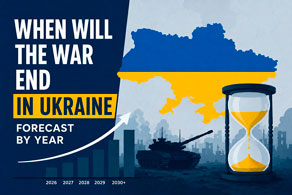
No one knows the exact answer. However, the most likely timeframe can be estimated based on the situation at the front, the negotiating positions of the parties, military budgets, and the political calendar in Europe.
The end of a war is defined as a permanent cessation of large-scale hostilities, not the signing of a final peace treaty. Years can pass between a ceasefire and a full-fledged peace.
As of late June 2026, the positions of the parties remain virtually incompatible. Russia demands the withdrawal of Ukrainian troops from all four regions and Ukraine's renunciation of its NATO membership.
Ukraine is proposing various ceasefire options but is not prepared to accept Russia's territorial conditions. Moscow continues its offensive and shows no willingness to stop at the existing frontline.
At the same time, both sides have the resources to continue the war. Russia has adopted a budget for 2026 and a planning period for 2027–2028. According to SIPRI estimates, planned military spending amounts to approximately 6.3% of GDP in 2026, 6.2% in 2027, and 5.5% in 2028. This remains an extremely high level.
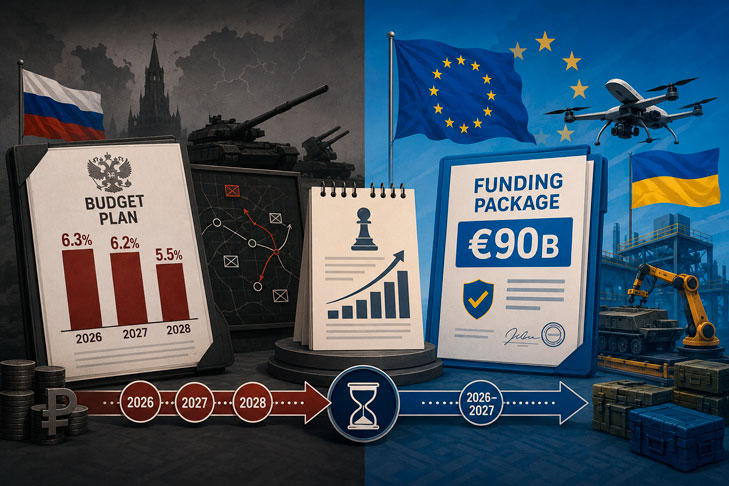
Ukraine also received a financial horizon of at least two years: the EU approved a €90 billion loan program for 2026–2027, a significant portion of which is intended for defense needs and the development of the Ukrainian military industry.
Consequently, neither side is yet in a situation where the war must be ended immediately due to a complete lack of resources.
The likelihood of a cessation of active hostilities
Analytical assessment as of June 29, 2026:
Term Probability of termination of the active phase
- By the end of 2026 10%
- By the end of 2027 40%
- By the end of 2028 70%
- By the end of 2029 88%
- In 2030 or later 12%
The probabilities in the table are cumulative. For example, 70% by the end of 2028 means the probability of the active phase ending in 2026, 2027, or 2028.
The most realistic positive option is not a full-fledged ceasefire, but rather a limitation on long-range strikes, a temporary pause, or local agreements.
2027 is the main window for negotiations
The probability of the active phase completing by 2027 is already estimated at 30%.
By that time, accumulated military and economic losses will have increased. Furthermore, a significant portion of the current European programs scheduled for 2026–2027 will have expired, and the parties will have to make decisions on the continued financing of the war.
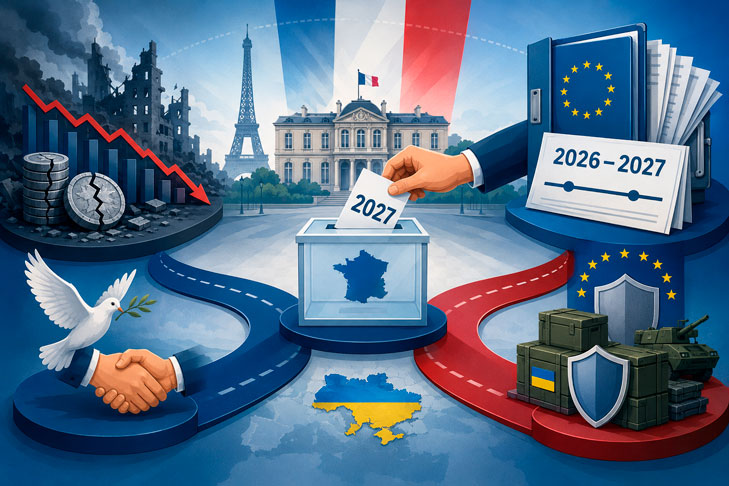
Presidential elections will also be held in France in 2027. The new president could change the tone of European policy: more actively pursue negotiations or, conversely, increase support for Ukraine.
2028 is the most likely year for the active phase to end
I also estimate the probability of the end of large-scale military operations within 2028 at approximately 30%.
By this time, Russia will have exhausted its current three-year budget planning horizon. This doesn't mean it will run out of money, but it will require a new political decision: continue the war at the current level or seek a compromise.
Western contracts for servicing Ukrainian equipment and aircraft are also scheduled to continue through 2029–2030. However, such contracts will be required even after the ceasefire—to rebuild the army and deter a repeat attack.
My baseline scenario is the cessation of major hostilities in the second half of 2027 or during 2028.
2029 is a political turning point
The next European Parliament elections will take place in 2029. The regular electoral cycles in Germany and the UK are also approaching this time. The German Bundestag is elected for four years, while the British Parliament is elected for up to five years.
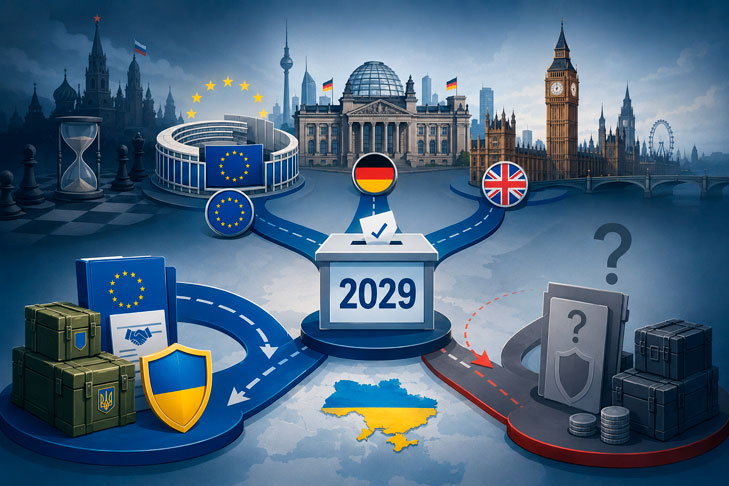
Russia may be counting on new governments being less inclined to finance Ukraine. This is merely a guess—a change in power doesn't necessarily mean an end to aid. But the anticipation of political change may push the Kremlin to prolong the war.
Conclusion for investors: The main scenario is the end of the active phase of the war in 2027–2028, more likely through a ceasefire and freezing of the front than through a full-fledged peace treaty.
Financial markets will likely begin to react before a formal agreement is reached—once stable negotiations emerge and the intensity of fighting has been confirmed to have abated. In this case, the zloty and euro, Central European assets, Polish banks, and construction, logistics, and infrastructure companies could benefit.
But building an investment strategy on the assumption that the war will definitely end by 2026 is too risky. It's wiser to assume that heightened geopolitical risk will persist for at least another eighteen months to two years.