Dynamics of oil prices 2014-2015.
For almost every trader who has been working on the stock exchange for years and tracking major  global instruments like gold, 2014 marked a turning point in their worldview. Oil is rightly called "black gold" around the world, with the belief that its reserves are likely to be depleted over time.
Almost every country in the world is, in one way or another, dependent on fluctuations in oil prices. No matter how you look at it, the entire industry is somehow tied to refined petroleum products, and therefore directly to oil itself.
Even the recent collapse of the ruble in Russia is linked to the fall in the price of black gold. So what is it that has caused this shift in traders' minds? Why are so many of us simply unable to accept such a precipitous decline in oil prices?
Oil price movements have always been linked to some crisis in the Middle East. For example, during the Iraq War, oil prices rose rapidly. A similar situation has always existed with Iran and many conflicts in countries where the main oil production occurs.
The constant instability of these regions led to a long-term high demand for oil on the market, which producing countries were unable to fully meet due to conflicts and the destruction of production sites.
Therefore, those who have traded on the Forex market for a long time should simply reframe their thinking and understanding of things and remember one simple rule: If there is a military conflict between major oil-producing countries, oil prices will rise rapidly, and not the opposite, as happens with currencies.
From 2000 to 2008, the price of oil rose rapidly, reaching $133 per barrel from $15 per barrel in July 2008. During this period, many stock traders became millionaires and couldn't even imagine that oil prices would ever fall. For eight years, we all witnessed a steady rise in oil prices.
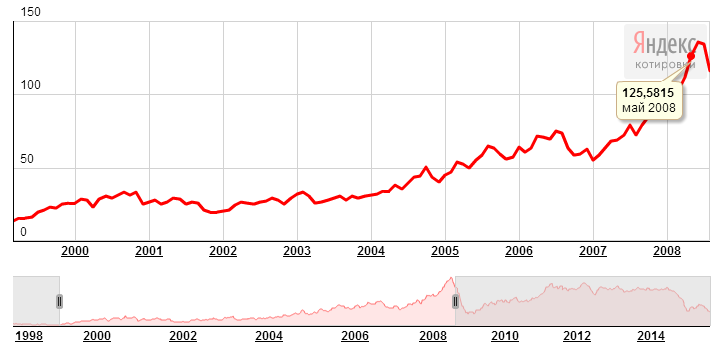
However, such growth simply couldn't last forever, and in June 2008, oil prices began to collapse, thanks to Saudi Arabia, which was able to meet demand for the product. As you can imagine, when an exporting country tries to maintain its market share, it constantly increases production, so, as many analysts believe, supply simply began to exceed demand.
However, there's a second version of this collapse, which is blamed on America after negotiations with the Saudi Arabian sheikh. I honestly don't know which version is more plausible, but by November 2008, the price of oil had reached its lowest point, reaching $43 per barrel.
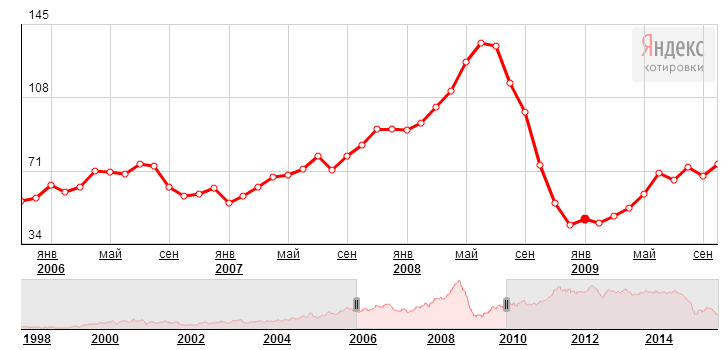
Starting in January 2009, the price of oil began to climb again, continuing until it reached a new high of $124 per barrel in 2012. As you can imagine, the asset rose rapidly over the next four years. For many who entered the market, it seems that oil is always rising. From March 2012 to July 2014, oil traded between $102 and $111 per barrel—in other words, it was in a sort of sideways trend.
The asset was stable, as the global situation was more or less stable. However, in July 2014, this calm broke, and the price plummeted without any rebounds. Many analysts wrote that the price of oil should rise due to the situation in Syria, the active threat from the Islamic State, and new, endless cycles of war, which, as is typical, should have forced countries on their borders to reduce oil production, leading to an increase in prices.
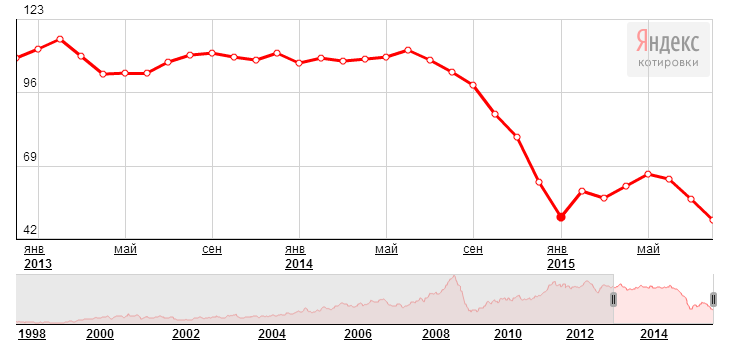
However, 2014 simply turned all conceivable and inconceivable assumptions of traders regarding the movement of the price of oil upside down, when it managed to literally collapse from July 2014 to January 2015 to as low as $50 per barrel, without any pullbacks.
Many attribute this decline to the conflict between the US and Russia, since, as we know, the Russian budget is directly tied to the oil price, so the ruble plummeted with the fall in oil prices. Furthermore, amid the escalating tensions over the war in Ukraine, the US President traveled to Saudi Arabia for talks.
Following the negotiations, the world's largest oil exporter announced that they would not reduce production but would increase it even if the price per barrel remained at $35. Subsequently, as you probably all saw, the oil price began to stabilize, and from January 20, 2015, to May 11, there was a price rebound, reaching $66 per barrel.
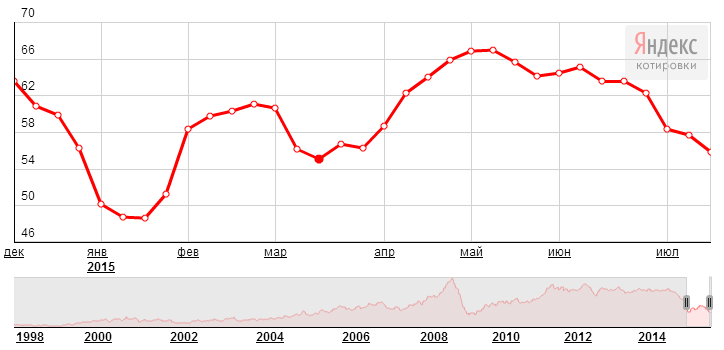
Before the stock had time to gain momentum, new, high-profile news emerged: Iran's oil sanctions had been lifted. This news, coupled with exporters' decisions not to reduce production, ended the pullback and the price continued its downward trend.
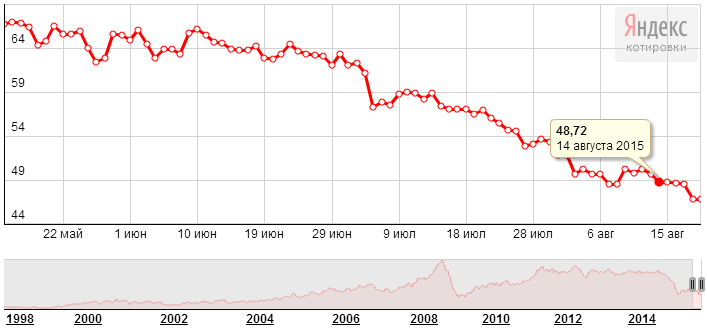
Currently, the price per barrel is around $47, and if Iran actively enters the selling markets, the asset will clearly fall further to at least $30. Moreover, against the backdrop of military conflict in the Middle East, the price of oil is far from its real value and has become politicized.
Therefore, it seems plausible to conclude that 2014-2015 were the most unpredictable years for traders, as all the usual laws that have driven oil prices throughout this period have simply been broken. Thank you for your attention, and good luck!