Trader career.
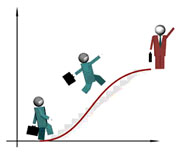 Just a few years ago, becoming a trader wasn't an option for everyone; the job required specialized education and was only available at large international brokerage firms and hedge funds. But in recent years, the situation has changed dramatically, and a career in trading is now much easier; all that's required is desire and perseverance.
A trader's career can take several paths. The first, and most straightforward, involves investing with your own capital. The second is working for a dealing center or investment company.
This article will discuss what you need to do to become a trader and the challenges you'll face.
An intriguing example is the story of Christopher A. Farrell. His first encounter with the stock market occurred immediately after graduating from college. He was fortunate enough to land a job at a brokerage firm, where he gained his first trading experience.
At 23, he decided to strike out on his own, converting one of the rooms in his apartment into a home office. Over the first few years, profits reached millions of dollars, prompting the decision to create his own investment fund, Farrell Preferred Stock Arbitrage Fund, LP.
Its first-year return was 65%, a fairly good figure for such a fund.
Christopher Farrell is completely satisfied with his work and the results he's achieved over the past ten years of trading. His net worth is now estimated at tens of millions of dollars.
Some might say he was lucky, but luck never seems to favor those who lie on the couch. Therefore, the sooner you start working on your trading career, the better your chances of success.
Where to begin?.
Unfortunately, it's quite difficult to find a job with a brokerage firm without sufficient trading experience. Even a specialized education is unlikely to help; you must first learn how to make a profit and bring it to your investors. Only then will the doors of investment funds and brokerage firms open to you.
Therefore, from the very beginning, you should accept that you'll have to acquire most of the information yourself. And gain practical experience by trading your own money.
Start by gaining a basic understanding of the forex market and its trading. Any forex textbook or video course will do the trick.
Afterward, you can move on to practical trading on micro accounts, which is only possible with cent brokers. While doing this, you can clarify any questions you may have and develop your own trading strategy, or try making money with existing forex strategies.
After achieving positive results trading on a cent account, you can move on to working with larger volumes.
The final stage of a trader's career.
Now that you've learned how to trade and your profit is 20% or more per month, the following options are open to you:
1. Opening your own investment company or creating a website to attract clients.
This is a fairly expensive option, requiring some investment, but you'll be working directly with investors.
2. Attracting clients to your PAMM account – in this case, in addition to the commission for using their funds, the investor will also have to share with the brokerage company, which will act as the investor.
The number of clients attracted, and therefore the capital and, consequently, profit, will directly depend on your position in the trader rankings.
3. Working for a company or fund – by demonstrating your work history, you can hope for employment with a dealing center or investment fund. In this case, the company itself will attract clients.
4. Independent trading – requires a significant amount of funds to achieve the desired result. For example, if you earn 10% per month on your main deposit, you can calculate how much you need to earn a good income.
A trading career differs from other types of income in that there are no freebies. No one will give you money for nothing; everything depends solely on your Forex trading results. But if you succeed, it could serve as the basis for realizing your wildest dreams.