How worthwhile is long-term investment in Bitcoin?
Bitcoin is a digital currency created in 2009 by an unknown person or group of people using the pseudonym Satoshi Nakamoto.

This cryptocurrency has no central issuer, and its issuance and transactions are regulated by a network of nodes running the Bitcoin software.
Bitcoin has quickly become popular among investors who see it as an opportunity to profit from its high volatility.
The reason for its popularity is the unprecedented rise in the price of this digital asset from $0.03 after its launch to a maximum of $68,000.
However, there are several reasons why long-term investments in Bitcoin may not be worthwhile.
-
Bitcoin is a speculative asset
Bitcoin is a speculative asset, meaning its value is determined by supply and demand. Naturally, increased demand causes the price to rise, while increased supply causes the price to fall.

Bitcoin's history shows that its price is subject to the florins. Since its inception, the electronic coin's price has increased nearly a millionfold, from a few cents to $68,789 in November 2021.
However, during this period, the value of the digital currency has fallen sharply several times, including to $3,000 in 2018.
This high volatility makes Bitcoin a risky asset for long-term investment. If the price falls, investors could lose a significant portion of their investment.
-
Bitcoin has no real value
Bitcoin has no intrinsic value. It's not a commodity that can be used to produce anything or provide services. Its value is based solely on what people are willing to pay for it.
The situation is reminiscent of the "Tulip Fever" in sixteenth-century Holland, when the price of a single tulip bulb was equivalent to 3 kilograms of gold. After the rush died down, even rare tulips fetched no more than a few florins.
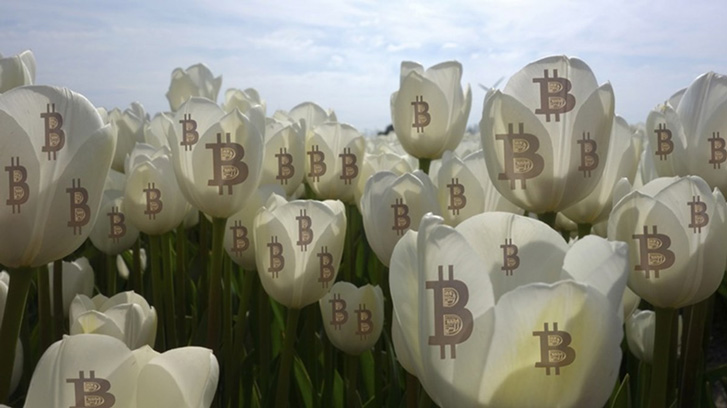
If demand for Bitcoin falls, its price will also decline. This is because Bitcoin will lack fundamental factors supporting its value; the cryptocurrency is not backed by real value.
-
Bitcoin is not legal tender
Bitcoin is not legal tender in most countries. In some countries, such as Japan, it is recognized as legal tender, but its use is restricted.
Bitcoin's inability to be used as legal tender limits its potential as an investment asset. If Bitcoin can't be used for everyday purchases, it is less attractive to investors.
-
The crypto market is vulnerable to attacks
The Bitcoin network is susceptible to attacks. In 2017, a major attack on the Mt. Gox exchange resulted in the theft of over $400 million worth of Bitcoin. Hackers attempt to steal coins from cryptocurrency wallets every day.
Such attacks could lead to loss of investors' funds. Furthermore, they could undermine confidence in Bitcoin and lead to a decline in its value.
-
Bitcoin has no future
Some experts believe Bitcoin has no future. They argue that Bitcoin is a bubble that will eventually burst.
It's already being actively displaced by stablecoins, whose exchange rates are more stable. Retailers are gradually abandoning Bitcoin as a means of payment.
This means that Bitcoin only retains its speculative component, and such assets are more suitable for short-term trading than for long-term investment.
It is possible that Bitcoin will break above $60,000 more times, but the price could also fall below $20,000 with equal probability.
For more information on other cryptocurrencies, see: https://time-forex.com/kriptovaluty