What is passive income and how much money does it take to earn it?
Just a couple of decades ago, people dreamed of retiring early, so that they could receive a regular income at age 50-55 and do what they loved.

Today, dreams have changed significantly, and twenty-year-olds now want to receive passive income, have no obligations, and have a lot of free time.
But at the same time, not everyone understands what passive income means and how much money they actually need to invest to earn it.
Passive income is a stable source of income that requires virtually no effort and no need to sell the asset itself.
Many people mistakenly consider a stable business to be a source of passive income, but once owners lose control of the process, most businesses fall apart.
Also, anything that requires regular monitoring and attention, such as YouTube channels, websites with traffic, and social networks, cannot be classified as such income.
Therefore, I would classify the following options as passive income:
| Assets | Estimated annual return in USD | Risk level |
|---|---|---|
| Dollar bank deposit | 3–4,5% | Short |
| US short-term bonds | 4–4,5% | Short |
| US long-term bonds | 4–5% | Low or medium |
| Corporate bonds of reliable companies | 5–6% | Average |
| High-yield corporate bonds | 6–8% | High |
| Dividend shares of large companies | 4–8% | Average |
| Dividend ETFs | 2–4% | Average |
| Property for rent | 4–7% | Average |
Renting out real estate —and leasing it through an agency, because if you rent it out yourself, you'll have to deal with tenants, make repairs, and find new clients. And that, you'll agree, isn't exactly passive income.
Bank deposits are a classic—simple and stable. Your money sits in the bank, and the bank pays you a certain percentage for it.
Bonds are government bonds, somewhat analogous to a bank deposit, except this time you're lending to the government and receiving a reward. Corporate bonds are a riskier option; they offer higher returns, but the risks are the same.
Stock dividends are often considered a form of passive income, but a stock portfolio requires constant monitoring and review, as some companies stop paying dividends and others experience declining profits. It's better to buy dividend indexes, which will immediately diversify risks and save time on monitoring.
Why will passive income remain a dream for many?
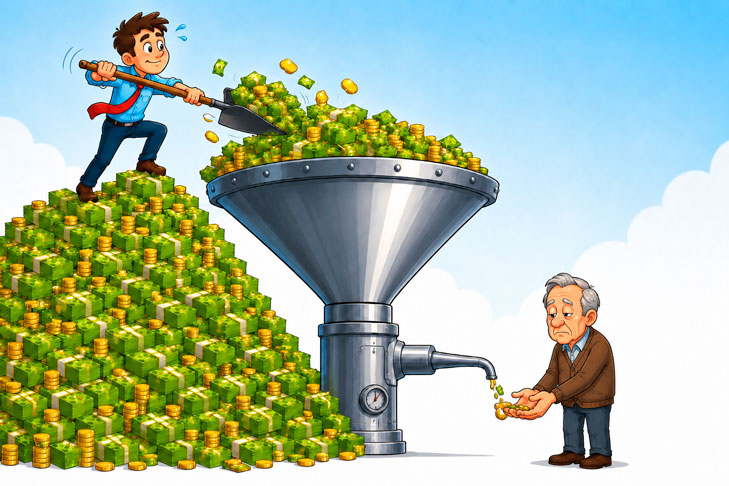
The main disadvantage of passive income is its low profitability; even in the best of circumstances, you are unlikely to earn more than 5% per annum after taxes.
That is, by investing $100,000, you'll receive, at best, $400 per month. Therefore, to earn a significant amount, you'll need at least $500,000.
Based on this, it is easy to calculate how much time it will take to accumulate the necessary capital.
But even if the amount seems too large, it's still worth starting. Passive income doesn't appear overnight; it builds gradually—at first, it might be a small increase in salary, then an amount that covers utilities, groceries, or part of your monthly expenses.
The main advantage of passive income isn't just the money itself, but the freedom it gradually provides. The more sources of income you have that aren't directly dependent on your daily work, the more secure you'll be in the event of job loss, illness, or other life circumstances.
Therefore, passive income isn't a get-rich-quick scheme, but a long-term financial goal. The sooner you start building capital, the greater the chance that it will actually work for you over time.