A weak Japanese yen has boosted Japan's economic growth outlook
A cheap national currency is not always a negative factor for a country's economy; most countries artificially try to prevent excessive strengthening of their currencies.
One of the countries that is trying to lower the exchange rate of its national currency is Japan, whose Central Bank very often intervenes in the foreign exchange market.
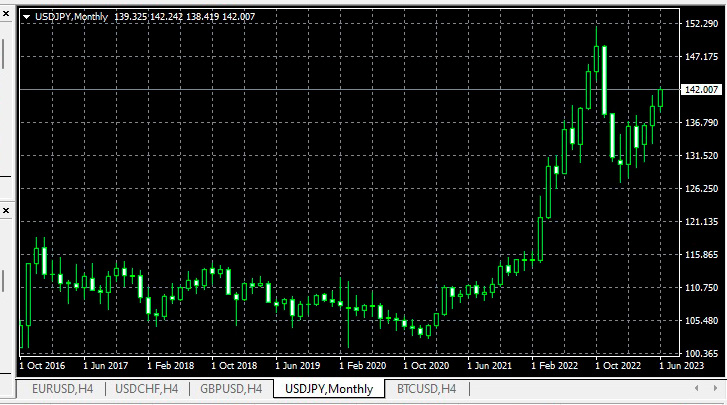
In 2022, the Japanese yen saw a record decline against the US dollar and other global currencies.
If over the past ten years the average price of the USD/JPY was at the level of 110 dollars per 1 dollar, then in 2022-2023 the situation changed significantly and the quote reached a 24-year high.
How does this situation affect Japan's economy?
Export development:
One of the main benefits of a cheap Japanese yen is its export incentives. With a cheap national currency, Japanese goods and services become more competitive on the global market.
This could lead to an increase in Japan's export volume and an improvement in the country's position in international trade.
Export companies have received additional profits, which contributes to economic growth and the creation of new jobs.
Decrease in imports:
If Japanese goods become cheaper on international markets, then, accordingly, imported goods become more expensive on the Japanese domestic market and lose their competitiveness.

This situation stimulates the development of import substitution; it becomes more profitable to produce such goods domestically than to import them from abroad.
Accordingly, new factories and plants are opening, new jobs are being created and unemployment is decreasing.
Tourism and services:
A weak Japanese yen has a positive impact on the tourism and services industries. A low exchange rate makes Japan more accessible to foreign tourists.
The tourism sector can expect an increase in the number of visitors, which will lead to an increase in the flow of funds into the economy.
Large numbers of tourists drive development in the service sector, including hotels, restaurants, retail, and entertainment. This can create new business opportunities and foster economic growth in these sectors.
Investments and development:
A weaker Japanese yen could also attract foreign investment to Japan. Foreign investors may find investing in Japan more attractive because their funds will be worth more in local currency.

This fact is confirmed by the recent increase in investment volume by Berkshire Hathaway, which is owned by Warren Buffett.
Buffett more than doubled his investments in Japanese companies such as Itochu Corp., Marubeni Corp., Mitsubishi Corp., Mitsui & Co., and Sumitomo Corp., which only confirms the positive trend in the Japanese economy.
The current situation is a signal to buy Japanese securities, as these assets are highly likely to generate profits in 2023-2024. Shares of Toyota, Sony, Mitsubishi, Canon Inc., Seiko Epson Corp., and other companies producing goods for the overseas market have good prospects.
You can open stock trades with the following brokers: https://time-forex.com/vsebrokery/brokery-fondowogo-rynka