When the war in Ukraine will end, the forecast is bleak
Many financial and investment decisions directly depend on the understanding of when the war in Ukraine will end. This question is currently of concern not only to politicians but also to investors, as it affects the prices of oil, gold, inflation, and interest rates.
Until recently, we were told that we only needed to be patient for a month or two, and the long-awaited peace would arrive. Now such statements have practically disappeared.
They have been replaced by more cautious forecasts: the war could last at least another two years, after which there will supposedly be a real chance for a peace agreement.
But if we ask the main question directly – when will the war in Ukraine really end – it becomes obvious: there is no clear answer today.
Moreover, there is not a single fact that would confirm a high probability of the war ending even by 2028.
If you look at the situation without emotions, the opposite scenario is more likely. Here's what analysts and experts think about this
When will the war in Ukraine end? Experts say:
| Source / Analyst | End forecast | Scenario | Comment |
|---|---|---|---|
| Joshua Burgin (Alliance for Global Security) | 2027–2028 | Protracted conflict | At least 12-18 months before changes on the front |
| RFE/RL analysts | After 2026 | Continuation of the war | There is no sign of the war ending in 2026 |
| Carnegie Endowment | Uncertain | Negotiations without results | Signs of a "quick peace" can be deceptive |
| IISS / military analysts | Until 2027+ | Continuation of hostilities | Russia is capable of waging war until at least the end of 2026 |
| Ukrinform (Ukrainian experts) | After 2026 | Transition to the protracted phase | There is no prospect of a quick end to the war |
| ISW / Western analysts | 2027–2028+ | Slow progress | Even Russia's goals may not be achieved before 2027–2028 |
| Western experts (Russia Matters) | Uncertain | Lack of peace | Russia's goals remain unchanged |
| GLOBSEC (61 experts) | After 2026 | War of attrition | The most likely scenario is a protracted conflict |
Ending the War in Ukraine: Russia's Position
Russia's position has not changed in recent years; the fundamental demand to surrender the entire Donbas remains in force, and there are no objective reasons to expect it to change in the next two years.
Hopes that Russia will run out of money are also unlikely to be justified: in such situations, states typically cut social spending but continue to finance military operations.
Can Ukraine make concessions?
At this point, the Ukrainian authorities have made no statements about their willingness to make territorial concessions. On the contrary, the official position remains unchanged.
Another important factor is the political situation in the United States.
2028 is a presidential election year, and the Democratic Party candidate is highly likely to win. Recent experience shows that Democrats actively support funding and military aid to Ukraine.
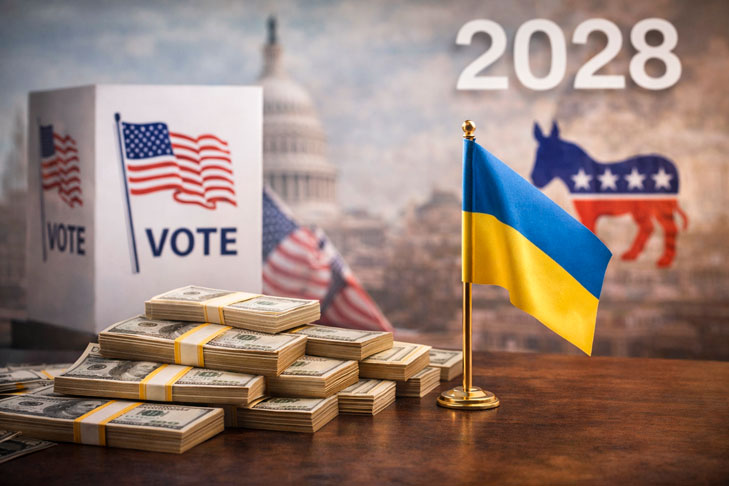
This means that even in the event of a protracted conflict, Ukraine will likely continue to receive resources to wage it.
The European Union also maintains its support, albeit with certain limitations. Even if the financial burden on the EU increases, it is unlikely to completely abandon its support for Ukraine in the coming years.
Thus, if we return again to the key question – when will the war in Ukraine end – then at the current moment there are neither economic nor political preconditions for its rapid completion.
The conflict will likely continue to develop in a protracted form, and the timing of its end will directly depend on changes in the balance of power, political agreements, or internal factors in the countries involved.
Conclusion: The likelihood that the war in Ukraine will end in the coming years remains low, and under current conditions it could continue significantly longer than 2028.