How will the end of the war in Iran affect markets?
The US House of Representatives has passed a resolution that limits Donald Trump's ability to continue military action against Iran without Congressional approval.
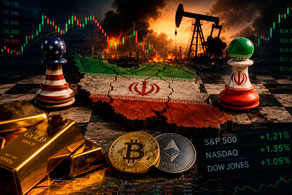
The vote passed by a narrow margin, so it is too early to talk about the end of the conflict.
But the very fact of such a decision is already important for the markets: if the Senate supports a similar position, the likelihood of freezing the war or moving to negotiations will increase significantly.
For investors, the conflict over Iran is important not only as a political event. It directly impacts oil prices, inflation expectations, the dollar exchange rate, gold, cryptocurrencies, and stock indices.
Therefore, even rumors of a ceasefire or a limitation of military operations can quickly change the mood in the markets.
Historical Analysis: How Markets React to Conflict Ends
History shows that markets typically fear uncertainty more than conflict itself. When it becomes clear that the worst-case scenario won't materialize, investors begin to reduce their defensive positions and return to riskier assets.
| Event | What happened | Market reaction | Conclusion |
|---|---|---|---|
| Gulf War, 1990–1991 | Oil prices surge on supply disruption fears | As the risk of a protracted war receded, oil began to lose its war premium, while stocks recovered | When the threat of an energy shock subsides, the stock market usually receives support |
| Iran nuclear deal, 2015 | The market has begun to consider the possibility of lifting some sanctions and returning Iranian oil | Oil prices came under pressure, while overall risk appetite improved | Iran diplomacy increasingly reduces oil premiums |
| US-Iran Tensions Escalate, January 2020 | After the assassination of General Soleimani, markets feared a major war | Oil and gold initially rose but then retreated after the risk of escalation diminished | If the conflict does not escalate into a major war, defensive assets quickly lose some of their demand |
| The current situation around Iran, 2026 | The US Congress has begun to limit the president's war powers | Markets are pricing in a chance for negotiations, but remain cautious | If the Senate supports war limitation, de-escalation becomes more likely |
What will happen to gold?
Gold traditionally rises during periods of fear, war, and uncertainty. But if the conflict around Iran begins to subside, some investors may take profits and exit safe-haven assets.
This doesn't mean gold will necessarily fall sharply. It still has other support factors: high global debt, central bank purchases, dollar weakness, and expectations of rate cuts. But the war premium in gold's price could diminish.
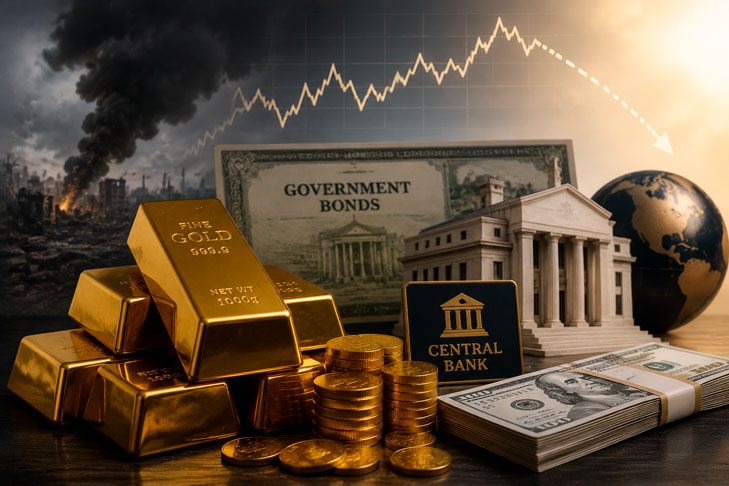
Therefore, in a peaceful scenario, gold may enter a correction or move sideways, especially if oil prices and inflation risks fall simultaneously.
What will happen to cryptocurrencies?
Cryptocurrencies are often touted as safe havens, but in practice, during geopolitical crises, they often act as risky assets. When investors fear war, they reduce their positions in Bitcoin, Ethereum, and especially altcoins.
If the conflict is frozen, the crypto market could benefit from a return to risk appetite. In such a scenario, Bitcoin typically appears more resilient, while altcoins could experience stronger movements, but with greater risk.
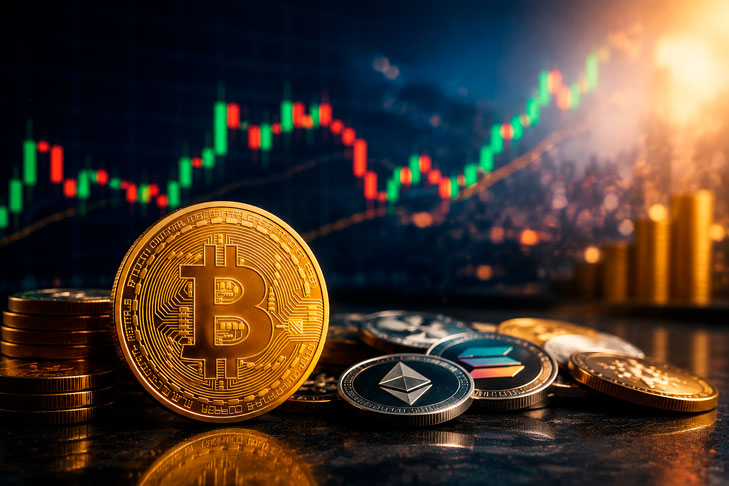
However, peace alone in Iran is not enough for a full-fledged bull market. For sustainable growth, cryptocurrencies require liquidity, demand from large investors, and accommodative central bank policies.
What will happen to the stock market?
The stock market typically responds positively to reduced war risks. The reason is simple: there's less risk of a surge in oil prices, lower inflationary pressures, more relaxed interest rate expectations, and better corporate profit forecasts.

The biggest winners are transport, airlines, industry, the consumer sector, and European markets. Europe is particularly sensitive to energy prices, so the reduced oil premium is a major benefit for it.
Conversely, oil and gas and defense companies may come under pressure. If investors begin to discount the risk of war, some capital may shift from these sectors to more cyclical stocks.
Stopping the war in Iran, or even freezing it, won't lead to a uniform reaction across all markets. A redistribution of capital is likely to occur.
Gold may halt its rise, although long-term support factors will remain. Oil will likely come under pressure as supply risks decline. The stock market will receive a positive signal, especially in sectors benefiting from cheaper energy. Cryptocurrencies may rise on the return of risk appetite, but their movement will remain volatile.
The main intrigue now is the vote in the US Senate. If the second chamber also supports limiting military powers, markets could perceive this as a serious step toward a diplomatic scenario. In that case, fear will gradually give way to cautious optimism.