Financier Ben Shalom Bernanke
Ben Shalom Bernanke is one of the most prominent figures of our time. He served two terms as Chairman of the US Federal Reserve and exerted a global influence on the global economy.
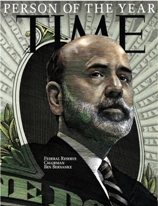
Ben has an immense academic record, and in the field of economics, he is considered one of the world's foremost experts.
During his tenure at the Federal Reserve, he earned the nickname "Helicopter Ben," as he repeatedly compared inflation to a helicopter from which vast amounts of money were being dropped.
Bernanke's biography is an excellent example of how determination and perseverance can influence anyone's future career, as he himself, through hard work, achieved his goal step by step.
Ben Shalom Bernanke, of Jewish descent, was born in Augusta, Georgia, back in 1953.
Ben grew up in a normal, middle-income family, with his father earning good money as a pharmacist and his mother working as a teacher.
Ben didn't grow up alone; he has a younger brother and sister. From childhood, Ben Shalom Bernanke demonstrated various talents. You won't believe it, but even at a very young age, Ben was very good at math, and when children were still dreaming of going to school, he was an excellent strategist, studying statistics in an interesting way by researching baseball games.
At age 11, he won his state's spelling bee. A highly active student, Ben edited the school newspaper and also honed his knowledge of advanced mathematics, which is only taught at universities. His in-depth study of mathematics resulted in a score of 1590 out of 1600, the highest in the state.
He was also a very skilled saxophone player, which is why he was nicknamed the best saxophonist in the state.
After graduating from high school, Ben Shalom Bernanke entered Harvard. However, the story of his admission is quite surprising. His parents, devout Jews, were against Ben attending Harvard, believing he would become too engrossed in student life and lose touch with Judaism.
In order to persuade the parents to let their son go, Harvard professor Kenneth Manning came to them and held a long conversation with them, after which Ben was released to study.
Ben was a very good student, so in 1975 he received his bachelor's degree with honors. After receiving his bachelor's degree, Bernanke changed his worldview and enrolled in the English department, focusing on the subject.
Incidentally, many of his colleagues at the Federal Reserve System noted that Bernanke had an excellent command of speech and language, which allowed him to clearly formulate the Fed's future goals and objectives without the assistance of specialists. In 1979, Bernanke received a doctorate in economics from the University of Massachusetts.
Career ladder
After receiving his doctorate in economics, Bernanke was invited to teach at Stanford University, where he successfully lectured from 1979 to 1985. He then changed jobs and, beginning in 1985, began teaching at Pristan University until 2002, where he eventually became dean of the faculty.
As he developed his academic career, authoring numerous valuable papers on economics and monetary policy, Ben began to gain recognition in academic and expert circles. In 2002, he was offered a position at the Federal Reserve, where he began working closely with then-chairman Greenspan.
Alan Greenspan was an outstanding economist, so Ben saw him as a mentor and obeyed and learned from him in everything.
Between 2005 and 2006, Bernanke became Chairman of the White House Economic Advisory Board, and in 2006, George W. Bush himself nominated him for the role of Federal Reserve Chairman. Incidentally, almost the entire Senate, with the exception of one member, voted for Ben Shalom Bernanke.
After Bush's term, Obama became the new president, who proposed that Bernanke remain for a second term, after which, in 2010, the Senate again approved the appointment of a new president by a majority vote.
At the end of 2014, Bernanke's tenure as Fed Chairman ended, and he decided to step down and decline a third term. In 2015, he became a financial advisor to investment giants Citadel and Pimco, where he continues to work today.