Bill Hwang from McDonald's cashier to managing billions
Among the world's famous financiers, there are not many people of Korean descent who have managed to rise to the top of the financial Olympus.
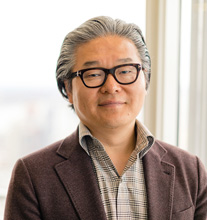
One of the most famous Asian investors is Bill Hwang, an Asian American who managed to become the owner and manager of the largest hedge fund.
Who is Bill Hwang?
Sung Kook Hwan, or Bill Hwan, born in 1964, is a Korean who immigrated to the United States in 1982. According to Hwan, when he first came to the United States, Hwan did not know English and only began to learn while working part-time at McDonald's.
After his father's death, Hwang's mother moved the family to Los Angeles. Hwang studied economics at the University of California and later earned an MBA from Carnegie Mellon School in Pittsburgh.
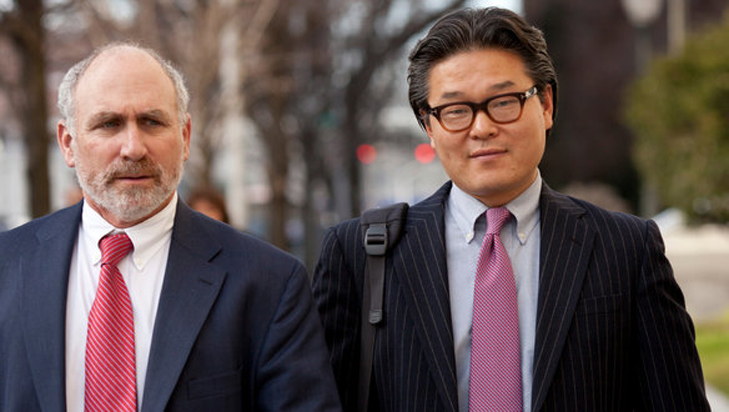
Colleagues say Hwang is one of Robertson's most successful protégés. It's no wonder Robertson himself called Hwang "the Michael Jordan of Asian investors.".
Julian Robertson and Bill Hwang
In 2000, Hwang launched his own fund, Tiger Asia Management. Initially, he used contracts for difference (CFDs), investing only in Korean, Japanese, and Chinese companies.
2007 was an extremely successful year, with investments helping Hwang achieve returns of up to 40% and increase the fund's capitalization to $10 billion.
But the joy was short-lived; at the end of 2008, after a major deal was opened to sell Volkswagen AG shares, the share price began to rise rapidly, causing colossal losses.
By the end of 2008, the fund had lost 23%, and many investors withdrew their money, dissatisfied with the company's policies and its approach to business.
In 2012, the US Securities and Exchange Commission (SEC) accused Tiger Asia of insider trading and stock manipulation in two Chinese banks. The agency alleged that Hwang violated the law by obtaining confidential information about pending stock offerings from underwriting banks and then using it to profit illegally
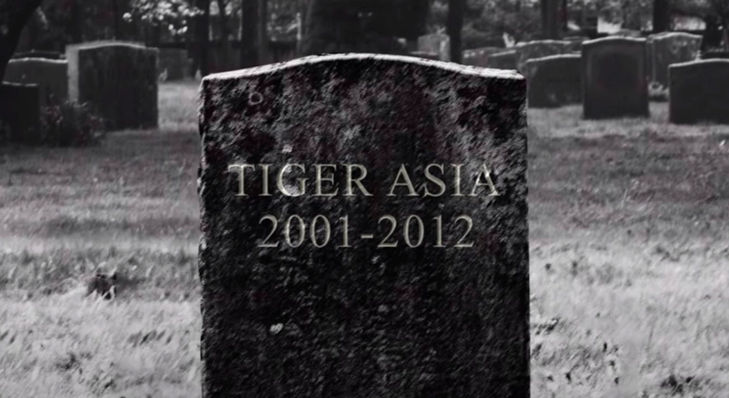
Hwang and the company were ordered to pay $60 million to settle criminal and civil charges. At the same time, the SEC barred Hwang from establishing a fund, and the Hong Kong government banned Hwang from trading on the Hong Kong Stock Exchange for four years (the ban expired in 2018).
After his failure in 2013, Hwang founded Archegos as a family office with a reserve capital of $200 million! This time, there were no outside investors, only his own funds.
What are the specifics of Bill Hwang's stock trading strategy?
Swap trading. While US law prohibits individual investors from purchasing securities for amounts exceeding 50% of their margin, this does not apply to hedge funds and family offices.
According to the SEC indictment, Hwang's trading strategy involved excessive leverage, reaching up to 1:10.
Long positions represent between 1/3 and ½ of the total value of the company, which will be the focus of the 10 most valuable companies (top 10 holdings).
To execute the swap, Archegos will offer a percentage of the position's value in cash as margin to the bank, as collateral.
Because swaps are always paid daily based on profit and loss, Archegos had to include a second type of collateral.
If the value of the transaction increases, the bank will pay Archegos a corresponding amount in cash depending on the rate of increase in the share price:
If the price drops, Archegos will have to add more collateral, which is known in the industry as "margin pumping." This means that as long as Hwang has enough money to pump up more margin, if the transaction fails, the bank can continue lending Hwang more money to buy more, or keep the original asset price unchanged without having to liquidate.
The bank charges a fee for its services. To avoid market risk, the bank buys the underlying shares and simply pays the profits from these shares to Archegos. As Archegos buys more swaps, the banks also buy more shares, which further pushes prices up.
The exchange offers another advantage for Hwang: anonymity: people who lend money to Hwang will only know about their trades with him, unaware that Hwang also trades—in the same stocks—with other banks. Viacom CBS Inc., for example, helps Hwang perfectly conceal both his identity and the size of his open positions. As of the end of March, Archegos held 59 million Viacom shares from Morgan Stanley, Goldman Sachs Group Inc., Credit Suisse, and Wells Fargo & Co.
As Archegos buys more and more shares, their price will increase according to market rules. As the price rises, Archegos makes even more profit because shares bought at low prices are worth more. Archegos used this profit, leveraged swaps, and bank loans to buy more and more of certain shares, thereby creating a kind of price pyramid.
Reduce or stimulate demand 30 minutes before closing
The last thirty minutes is the time to establish the closing price, a very important piece of information for investors, many people even base it on this to judge whether the price will rise or fall the next day.
Hwang poured money into buying large quantities of shares to maintain high prices and support leveraged positions. Since higher prices would increase margins for SBS Archegos, based on end-of-day valuations, Archegos would have more leverage to buy more shares.
According to the SEC indictment, Archegos sometimes sold shares in the morning to "make room" for later trades that could have a major impact on the stock price.
Moreover, maintaining the trading price at important times, such as end-of-day pricing, will attract more people to buy the security the next day, preventing prices from falling and eliminating the need to stimulate demand.
The SEC also accused Archegos of using numerous other non-economic transactions for the sole purpose of maintaining a certain price level and countering selling pressure:
The fourth quarter of 2020 was a very strong one for Hwang, as the S&P 500 rose nearly 12%, 7 out of 10 Archegos shares rose more than 30%, and Baidu, Vipshop, and Farfetch alone rose at least 70%.
All this made Archegos one of Wall Street's most coveted clients. Many people reported paying brokerage fees of up to tens of millions of dollars a year, and Hwang's company exceeded the $100 million threshold.
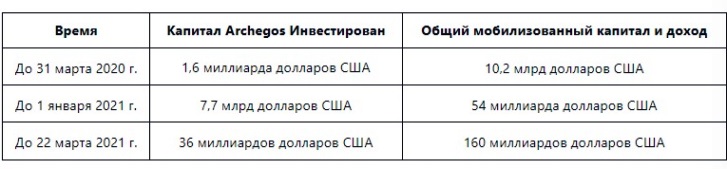
At the time, Hwang already had around $20 billion, starting with $200 million. At times, his account balance soared to $36 billion in less than six months. Most of his capital came in within 12 to 24 months, from the moment Hwang began using leverage to generate profits.
In less than 6 months, Hwang's account grew from $4 billion to $36 billion!
Profit-hungry banks eagerly lent money to Hwang. Goldman agreed to sign on as a client with Archegos by the end of 2020.
Raising capital during a pandemic
However, according to the SEC's filing, Archegos' capital declined significantly when the Covid-19 pandemic began in 2020, but since March 2020, it has been growing again at a record pace.
Thanks to leverage and borrowed funds from many banks, Hwang owns a huge amount of stocks that can manipulate the market.
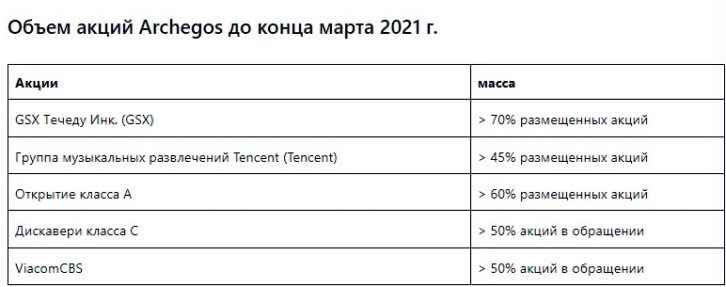
Meanwhile, Viacom CBS benefited twice from the hedge fund's manipulation, not only gaining 300% in value but also taking the top spot in the S&P 500.
When Hwang bought 59 million Viacom shares, the stock price rose 300%.
Late in the evening of March 22, 2021, Viacom announced a $3 billion stock and convertible debt sale. Viacom shares fell 9% on Tuesday and 23% on Wednesday, forcing Archegos to breach its margin calls and alarming brokerages.
At the close of trading on Thursday, March 25, Viacom shares fell another 5.3% to $66.35 per share. Hwang's partners held an emergency meeting to discuss the unprofitable trades and how this would impact the stock price.
At this time, not only Hwang but also the banks faced a dilemma. If the stock rebounded, everything would be fine. But if one of Hwang's partners sold the shares, everything would go down the drain. That's why Credit Suisse didn't take any overt action.
The beginning of the end
Morgan Stanley ultimately launched a preemptive strike, quietly selling $5 billion of its Archegos holdings. On Friday morning, before the first session opened at 9:30 AM in New York, Goldman began liquidating $6.6 billion, including Baidu, Tencent Music Entertainment Group, and Vipshop. It followed with $3.9 billion from Viacom CBS, Discovery, Farfetch, Iqiyi, and GSX Techedu.
When the storm died down, Goldman, Deutsche Bank AG, Morgan Stanley and Wells Fargo also exited Archegos with minor losses.
The bank was able to liquidate all of Hwang's positions because, during the swap, when the stock fell, the counterparty called for additional collateral to hold the positions, but Hwang did not have enough money to cover the positions, so the bank took decisive action, forcibly closing the positions.
The risky strategy led to multi-billion dollar losses for the world's largest banks, with the total damage estimated at $10 billion.
The climax of the story was the arrest in the US of Archegos Capital hedge fund founder Bill Hwang in April 2022. The financier is accused of market manipulation and using insider information to profit.