Businessman and manager Gennady Nikolaevich Timchenko, one of Russia's largest oil traders
Many people remember the Soviet Union as an ideal utopia, although in reality they only remember a couple of years of this state's existence, or have only heard about it from the memoirs of their parents.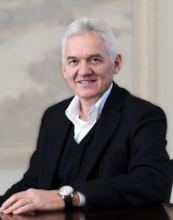
The equality of people in society, the exaltation of the working man and the blue-collar profession, salaries that, in theory, allow for a lot of things—all of this is still remembered nostalgically by both pensioners and young people who never lived in the USSR.
However, it was precisely the collapse of this state that allowed truly talented and enterprising people, whose potential had been constrained, to escape the general system of equalization.
In this article, you'll learn about the biography of a genius, a product of the system, who was able to fully realize his potential and become one of the 100 richest people on the Forbes list.
Gennady Timchenko was born on November 9, 1952, in Gyumri, then part of the Armenian SSR. It's hard to call Gennady Nikolaevich's childhood truly his own.
Thus, from 1959 to 1965, Timchenko lived with his parents in the GDR, a now defunct state.
The family then moved to a more familiar environment, namely, Ukraine. The future businessman and investor graduated from high school in the city of Bolhrad, Odessa Oblast, after which the family moved back to Russia.
Gennady Nikolaevich Timchenko had a mathematical mind, so after graduating from school, he chose engineering over other professions. Timchenko entered the Leningrad Military Mechanical Institute, majoring in electrical engineering.
He studied productively, so his career took off very quickly. Immediately after graduating, he began working as a foreman at the Izhora Plant, where he manufactured and produced electric generators for nuclear power plants.
After five years at the plant, he was promoted and became a civil servant. From 1982 to 1988, he held the responsible position of senior engineer in the USSR Ministry of Foreign Trade.
He then took up the position of Deputy Director of the Kirishineftekhimexport association, which was one of the three leaders in oil refining and export in Russia.
In 1991, Timchenko received a job offer from Urals Finland Oy, a company based in Finland. It's worth noting that he initially served as the company's deputy director, and then as its general director.
In 1997, he and his partner founded Gunvor. Gunvor became one of the largest oil suppliers, with Timchenko's oil being purchased by companies such as Rosneft, Gazprom Neft, Surgutneftegaz, and others.
Own business
In 2007, Gennady Nikolaevich Timchenko founded the private investment fund Volga Group.
It's worth noting that the fund fully mirrors Timchenko's investment views. Specifically, its stock portfolio includes shares of major oil and gas processing companies, construction companies, coal mining companies, and companies involved in the processing of Russian raw materials. Thanks to his responsive management, the fund has maintained profitable operations for over seven years, gradually increasing its assets.
Recently, the fund's interests have expanded significantly, and investors' money has begun to invest in real estate and financial sector assets.
In 2014, US President Barack Obama imposed sanctions on Gunvor and personally on Gennady Nikolaevich Timchenko.
Therefore, Gennady Nikolaevich hastily sold his controlling stake and began withdrawing funds from European and American banks to avoid a complete asset freeze.
Gennady Timchenko places a significant emphasis on charitable activities; his eponymous foundation funds charitable projects in sports and the social sphere.
Today, Timchenko's net worth is estimated at $10 billion, earned through a successful career as an oil trader and his company, Gunvor. He built a vast fortune from virtually nothing, something virtually impossible in the Soviet Union.