Financier Leonid Blavatnik
Many beginning investors make the mistake of avoiding assets in industries in which they are not specialists. 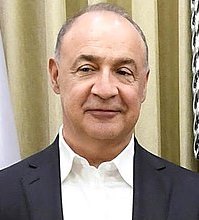
It's foolish to judge a company by the standards of an oil or steel industry worker when attempting to understand its technical process to evaluate its effectiveness.
To do this, it's enough to carefully study the financial statements, profit indicators, and understand the uniqueness of the product before you.
Billionaire Leonid Blavatnik followed this logic, saying in many interviews that he had no understanding of oil production or aluminum smelting, but this in no way prevented him from earning billions of dollars by investing in these businesses.
The future billionaire, and one of the top names on the Forbes list, was born in 1957 in Yaroslavl. He was instilled with a love of mathematics practically from birth, as his father was a professor at the local polytechnic university.
Therefore, as soon as Leonid grew up, he was sent not to a regular school, but to a specialized mathematics school. However, he was also very drawn to cinematography and even attended one of the local clubs.
After high school, the gifted mathematician chose Moscow State University, the Faculty of Mechanics and Mathematics. However, despite his incredible exam results and excellent grades, he was rejected for internal reasons.
So, without thinking twice, he enrolled in the computer science department of an equally reputable institution, the Moscow Institute of Transport Engineers. It was there that he made his fateful acquaintance with Vekselberg, with whom he would begin building his investment empire.
Even as a student, he was drawn to business and profit. Once, while they were on an internship in a Soviet city, he bought an entire crate of stewed meat, which he barely made it to the bus.
While others laughed and were surprised, Leonid and Vekselberg knew for sure that stewed meat was in short supply in their region, so by selling it they could make a good profit.
But the Blavatnik family didn't see themselves in the USSR, so, having dropped out of school after their fourth year, they moved to the United States, where they received citizenship.
He continued his education at Columbia University, where he received a Master of Computer Science degree and became one of the most brilliant IT specialists.
First job and early career.
The young programmer's first job was at the American clothing chain Macy's, where he was tasked with setting up and modernizing the company's information system.
When everything was completed, management was so impressed with him that they offered him a reward. Instead, he asked to write a recommendation for admission to Harvard Business School.
While studying at Harvard, he worked as an auditor at one of the largest firms, Arthur Andersen, and in 1986 he created his personal investment company, Access Industries.
 Access Industries invested in the transportation sector, which allowed Leonid Blavatnik to establish new connections in the US and Europe.
Knowing this, Vekselberg, a power broker in the Russian market, proposed to Blavatnik a joint venture, now known as Renova. Their first target was aluminum smelters.
At the time, the companies had huge reserves of aluminum alloy that they were unable to sell. Blavatnik established connections in the US and sold the first 500 tons of aluminum, becoming virtually the only bridge to the market. He also became the largest shareholder in UC Rusal, a company called TNK.
At that time, Russia was engulfed in corporate warfare, as criminals, businessmen, and government officials competed for control of the companies. Therefore, when British Petroleum offered to buy TNK shares, Blavatnik immediately disposed of the problematic asset, earning over $2.1 billion.
He uses the freed-up funds—$2 billion from the sale and $3 billion in dividends—to invest abroad.
After exiting the Russian market, Blavatnik immediately acquired a division from General Electric and the giant Lyondell Chemical.
The deal was finally completed in 2007, and just two years later a severe crisis began, which drove Lyondell Basell into $20 billion in debt.
However, just as creditors began tearing his companies apart, Leonid declared bankruptcy and, through the courts, secured a debt write-off.
Once he was debt-free, he immediately listed the company on the New York Stock Exchange, earning him over $2 billion.
Leonid Blavatnik then purchased Warner Music Group, the world's largest record label, for $3 billion. Currently, Blavatnik's personal fortune is estimated at over $13 billion.