Trader Michael Steinhardt: The Influence of the Criminal Underworld on Financial Success
If you've read the success stories of great investors, you'll see a lyrical picture in almost every one of them, of an unknown boy thinking about his financial well-being and honing his skills for the sake of his future.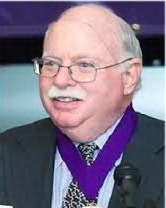
Backbreaking work and persistence make these people successful. Yes, it really is like a fairy tale, and you might even believe that you'll be in their shoes if you work hard enough.
However, behind the soap opera lies a far more complex process that made them who they are. Trader Michael Steinhardt is a leading trader and investor, with a net worth currently exceeding $1 billion and growing by nearly 20 percent annually.
His success is a role model for thousands of traders, but it is his journey to becoming a great man that perfectly reflects the dark processes that made him that way.
Michael Steinhardt was born on December 7, 1940, in Brooklyn, one of New York City's most disadvantaged neighborhoods. When he was less than a year old, his mother abandoned the family, leaving him in the care of his father.
Michael's father was a well-known figure in the criminal world and had connections with such gang leaders as Meyer Lansky and Jim Aiello Three-Fingered.
Getting to Know the Stock Exchange. Career
Michael Steinhardt first learned about the stock market and the world of stocks when he was just 13 years old. His father, to put it mildly, loved to squander his earnings playing poker. However, he didn't always come home empty-handed; once, he even won shares of Columbia Gas System and Penn-Dixie Cement from a rival. When Michael celebrated his thirteenth birthday, his father gave him these securities.
Michael didn't quite understand their value back then, but when he went to a brokerage house and they were valued at five thousand dollars, Michael immediately realized what he wanted to do with his future. To be fair, his father encouraged his son's interests throughout his formative years and regularly gave him large sums of money to buy securities.
After graduating from high school, Michael moved to Pennsylvania with his father's dirty money, where he attended Wharton University. After completing his studies, Michael Steinhardt served two years in the Army and, upon his return, began looking for work. His first job was at Calvin Bullock, where he filled a vacant position as an analyst.

After working for the company for some time, he decided to change careers and transferred to the brokerage house Loeb, Rhodes & Co. After working there for a long time, he encountered two promising managers, Fine and Berkowitz.
In 1967, two new colleagues and I founded a fund called "Steinhardt, Fine, and Berkowitz." The fund was based on the accumulated wealth of its three founders. The fund's first year of operation brought the company a nearly 100 percent return, as the lack of investors gave the managers complete freedom of action.
However, a year later, two of the founders left the firm, so the fund was renamed Steinhardt Partners. This fund closed its financial statements with a 20% return each year, and it maintained this performance until its liquidation in 1995. The manager himself claimed that every dollar invested in the fund turned into $485.
Despotism in the Workplace: Dirty Approaches
Steinhardt completely inherited all of his father's negative character traits, so his employees viewed him as the devil incarnate. For example, it was common for him to kick the door open and snap at his subordinates. His work methods also mirrored his father's. Michael paid newswires over $35 million annually for delivering important news a couple of minutes before other market participants.
Michael Steinhardt's methods have repeatedly landed him in scandal. In the 1990s, for example, a regulator investigated the fund for unfair market influence. To avoid creating panic and taking the case to court, Michael Steinhardt pleaded guilty and paid a $70 million fine.
Ultimately, after closing his fund, Michael Steinhardt distributed his billion-dollar earnings among the hedge funds of his former employees, which have collectively returned more than 20 percent annually.