Financier James Coulter, CEO of TPG Capital
Unfortunately, many ordinary people, even novice traders and investors, view investment funds as simple companies that have simply cleverly structured their stock or bond portfolios to earn dividends.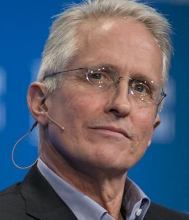
In reality, large funds are essentially raiders, with the caveat that everything takes place within the legal framework, and instead of thugs with bats, a team of lawyers and financiers sits at the table.
James Coulter's TPG Capital fund is no exception; moreover, TPG Capital has been repeatedly mentioned in news feeds in connection with scandals, including forceful actions against shareholders.
James Coulter's biography and his work at TPG Capital allow us to take off our rose-colored glasses and look at the investment world from a completely different perspective.
James Coulter was born to Protestant Methodists Shirley and James W. Coulter on December 1, 1959. He spent his childhood in Buffalo, New York.
It's worth noting that James Coulter showed an inclination toward business and self-sufficiency from childhood, a trait instilled in him by his father, who at the time worked as a chemical salesman and actively sold Chevron products.
James received his basic education at Shawnee High School. It's worth noting that from childhood, he showed a keen interest in learning, demonstrating a strong aptitude in mathematics, which he later demonstrated when applying to college.
After high school, James Coulter attended Dartmouth College, where he graduated with honors. He was quite an active student, being a member of the influential Alpha Chi Alpha fraternity.
Having received a bachelor's degree with honors from Dartmouth College, Coulter was able to continue his education on a scholarship, which he actually took advantage of.
After college, he attended Stanford Graduate School of Business, where he earned an MBA with honors and was named an Arjay Miller Scholar.
Career ladder
Many biographers portray James Coulter as an independent fighter who became a businessman immediately after university.
In fact, after receiving his MBA, James managed to get under the wing of a very aggressive and famous manager, M. Bass, who was at that time the head of the hedge fund Lehman Brothers Kuhn Loeb.
At the company, he was repeatedly involved in the merger of various companies, as well as bringing them into profitability with the subsequent sale of a controlling stake at three times the price.
It was there that he met the key team that would later help him embark on an independent investment path.
In 1992, after leaving Lehman Brothers Kuhn Loeb, James Coulter and his partner David Bonderman founded TPG Capital. The company's core operating principles were virtually identical to those of Lehman Brothers Kuhn Loeb.

The company found a dying, bankrupt enterprise, offered a large investment in exchange for a controlling stake, and after a huge infusion of funds, the company's shares sold at an order of magnitude higher price.
Many viewed this type of activity as a resuscitation doctor, meaning that the company was supposedly saving the company, but the price was sometimes devastating.
Almost from the very beginning of his activity, James Coulter began actively buying up shares of airlines.
So his very first investment, which brought in a stunning profit, was an investment in the bankrupt airline Continental Airlines, which attracted 66 million dollars.
After some time, the profit from the sale of the company's shares amounted to approximately $600 million, which was 10 times more than the initial investment.
Unfortunately, TPG Capital has not been without its share of dirty tricks in its operations, and the company has become notorious throughout the post-Soviet space.
Thus, TPG Capital was implicated in the armed takeover and redistribution of the large retail chain Lenta, where they, owning only 30 percent of the shares, seized the headquarters and installed their own director. Around 40 people were detained during this massacre.
The days of corporate raids are now long gone, and James Coulter is worth over $2 billion, with just over $50 billion under his management.