William Conway Jr.: The Origins of the Carlyle Group
The success of a fund or investment management firm depends largely not on the personal qualities of its leader or his or her investment management skills, but rather on the team and the ability to effectively delegate authority to subordinates.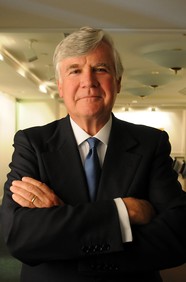
The most interesting thing is that many traders and managers are far from the shadows, bringing billions of dollars to the fund and investors, while a completely different person basks in the rays of glory.
William Conway can rightfully be called the eminence grise of the Carlyle Group, and in this article you will learn more than just the biography of this unique manager.
But also with the biography of the Carlyle Group, which would not have gained a position in the global market if William Conway Jr. had not made significant adjustments to the investment portfolio.
When it comes to his early years, childhood and school age, biographers know practically nothing, since, being the eminence grise of the company, William Conway was not particularly talkative with journalists and mentioned practically nothing about his early years in interviews.
However, it is known for certain that William Conway demonstrated good mathematical abilities, and from childhood he saw himself as a banker and manager in a jacket and tie.
He received his Bachelor's degree in finance from Dartmouth College, where he graduated with honors in 1971.
The next step was to improve his qualifications and self-worth, so he enrolled in the University of Chicago Booth School of Business, where he managed to obtain the desired MBA degree in business administration.
Career ladder
Excellent recommendations from teachers and a good education launched William Conway's equally phenomenal career, as his first place of employment was the National Bank of Chicago.
He lasted a little longer at his first job, a full ten years, and at the very beginning of his career he was far from managing money, as he was dealing with problematic credit debt, investing in projects, and consulting with bank clients.
As he rose through the ranks, he also became involved in staff training.
William Conway's second job was with MCI Communication, where he stayed for five years from 1981 to 1986.
It's worth noting that career advancement within the company was much faster, so at the time of his dismissal, he was leaving his position as the company's vice president, who had incredible connections.
Solo flight
His independent investment activities began in 1987, after Rubinstein lured him to his side and made him a co-founder in the creation of the Carlyle Group.
It's worth noting that in the company's first year of existence, they managed to raise around $5 million through their own connections, but the first year of operation was, to put it mildly, a failure.
Having reconsidered his views on investing, William Conway began actively engaging in the divestiture of companies, stimulating management at the proper level, and then reselling the company's shares.
At the same time, partner Rubinstein established a very trusting relationship with the Republican Party, attracting its main heavyweights to his company.
These connections took the company to a whole new level, as it gained access to defense contracts with the military.
Unfortunately, flirting with the presidential administration and engaging with politicians backfired. After Bush dragged the US into yet another war, the Carlyle Group was hit with a barrage of accusations of war sponsorship.

So in a major move, a huge number of former Bush administration officials were fired in a matter of days.
Nevertheless, even after the change of power, the company was able to establish new trusting relationships even with Obama, since at his request, an oil refinery in Philadelphia was purchased, which allowed 800 jobs to be saved.
The Carlyle Group currently manages approximately $156 billion, while its chief think tank, William Conway, has an estimated net worth of $2.8 billion.