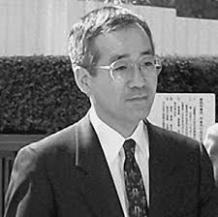
Trader Yasuo Hamanaka
Studying the biographies of famous people, especially traders, allows many beginners to learn valuable lessons, avoid the mistakes that affected their idols, and gain sufficient motivation to continue on their own path.
However, studying the autobiographies of not only so-called "Fairytale Heroes" but also the stories of the greatest losers, or as they are often called, "Antiheroes," is incredibly beneficial.
Few realize it, but virtually all the major upheavals in financial markets were triggered by truly brilliant traders who were long considered role models.
Studying the biographies of such individuals, you realize how fine the line between success and failure is.
Trader Yasuo Hamanaka was long called the "Copper King," and his asset management style, skillful prediction of copper price movements, and ability to extract staggering profits for his company made him a role model for thousands of aspiring traders.
Trader Yasuo Hamanaka was a true workaholic. His co-workers noted that when everyone else had gone home, Hamanaka would sit until three in the morning, waiting for the market to close, so he could always have the latest information at his fingertips. His many years of experience working for Sumitomo gave him complete freedom in trading.
Hamanaka was a highly profitable trader, having engineered a five-year surge in the price of copper on global markets that generated enormous profits for his company, but his method turned out to be less than legal.
Yasuo Hamanaka's Global Game
In late 1989, he and his colleague Yasuo Hamanaki developed a global copper trading plan, which was also a major scam. The plan involved artificially creating a shortage of the commodity by buying it up at every possible market. Naturally, the shortage would drive up the asset's price, which would theoretically allow it to be sold at an inflated price in the future.
Since Hamanaka couldn't officially implement this plan, he exploited management's trust by falsifying documents and conducting all his operations outside the main accounting system. Thus, Hamanaka had two reports, one for himself and one for management.
Sumitomo was one of Japan's five largest corporations, so its capital was well-equipped to pull off this scam. For example, over the course of five years, Yasuo Hamanaki controlled more than five percent of the world's copper reserves, and his constant purchases led to the asset's value increasing by more than 50%.
The first nail in Yasuo Hamanaka's plan
The first time that possible manipulation in the copper market was raised by representatives of the London Mercantile Exchange was in late November 1995, when the emergence of another shortage led to an increase in the difference between spot prices and the price of copper futures by almost $300.
The discrepancy between prices on the commodity exchange and the futures market suggests that a major trader is behind this shortage, buying copper for speculative rather than commercial purposes. The investigation led to the corporation's management being notified of the abnormal purchase volumes. Sumitomo's board of directors failed to respond to the investigation, so Yasuo Hamanaki continued trading.
In May 1996, a second nail in Hamanaka's plan fell through, as Sumitomo auditors discovered a small copper transaction being processed through a completely different bank than the company's. The CEOs thought this was a minor infraction on Hamanaka's part, so they promoted him to subtly remove him from direct trading.
The auditors' investigation shocked the company's management, as Yasuo Hamanaki had been playing his global game for five years, and all the profits reported in the financial statements turned out to be losses.
The absence of Hamanaka and his massive purchases led to a dramatic drop in copper prices, which had been rapidly rising for many years. Many companies that had begun expanding their production due to the high cost of copper lost money, not to mention Sumitomo itself, which lost over $2.6 billion. The copper king was jailed for eight years!