Factors Affecting the British Pound Exchange Rate
The exchange rate is one of the key indicators of a country's economic condition; it is the value of the national currency that best demonstrates confidence in its monetary unit.

In the case of the British pound (GBP), its rate depends on many factors that can have both short-term and long-term impact.
Let's take a look at some of the main factors that influence the British pound exchange rate.
Economic indicators of the country
The health of the UK economy is a major factor determining the pound's exchange rate. GDP, inflation, unemployment, and other economic indicators can influence investor expectations regarding future currency movements.
Monetary policy of the Bank of England
The Bank of England plays a key role in determining the exchange rate of the British pound. Decisions on interest rates, the amount of money in circulation, and other monetary instruments can affect the inflow or outflow of capital into the country and, consequently, the exchange rate of the pound.
The Bank of England also frequently resorts to currency interventions, which occurs during sales of government debt securities.
Interest rate hikes typically lead to currency strengthening, while interest rate cuts can lead to currency weakening. Current rate - https://time-forex.com/uchetnye-stavki
Political stability and geopolitical situation
Political events and uncertainty can significantly impact the British pound's exchange rate. For example, Brexit negotiations have had a significant impact on the pound's exchange rate.
News about political events, elections or changes in government can also cause fluctuations in the exchange rate.
Conflicts, military actions, or international tensions can also impact the British pound's value. Investors tend to seek stable and safe investment opportunities, so instability leads to reduced demand for the pound.
Global economic situation
The British economy is closely linked to the global economy. Factors such as trade relations, global economic trends, and the financial stability of other countries can have a significant impact on the British pound's exchange rate.
A prime example is the outbreak of military action in Ukraine, which saw the GBP/USD currency pair fall by 20% in the first 10 months of 2022 :
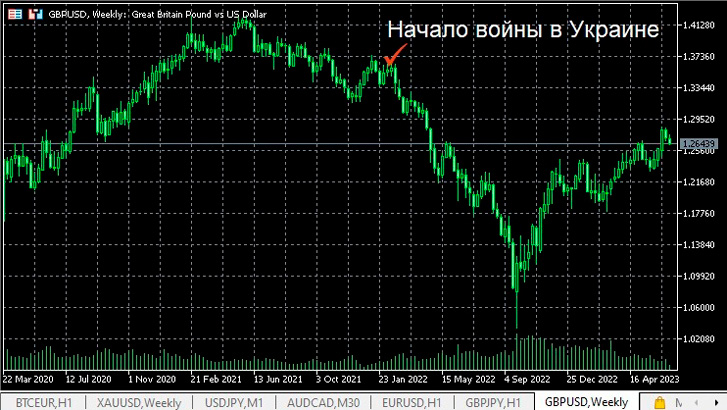
For example, if the global economy is in recession, this could impact UK exports and lead to a weakening of the pound.
While this isn't an exhaustive list, these are the main factors that can influence the British pound's exchange rate. It's important to note that the exchange rate is the result of complex interactions between various factors, and predicting it can be challenging.
By following economic news, political events, and global trends, you can gain insight into potential movements in the British pound exchange rate and make more informed decisions when exchanging currencies or conducting other transactions in the foreign exchange market.