The Best Books on Forex Trading
All experienced and professional traders began their journey with education. Of course, the vast information space  offers numerous sources of information, including various articles and video tutorials, but experience shows that books have the most profound effect on a trader's learning process.
Every book is a source of knowledge, and when it comes to books on stock trading, these are also stories of successful people who were able to identify the main points from a pile of unnecessary information.
It's worth noting that the effectiveness of any given market analysis method isn't based on rhetoric, but rather on real, successful traders who have put their experience down on paper.
We have a fantastic selection of books available for download in the Forex Books section of our website . However, to avoid confusion, we've decided to provide mini-recommendations of books that will be extremely beneficial and teach you the basics of trading.
 The first book I would recommend to all beginners is the publication from the Reuters team of analysts, "Technical Analysis: A Course for Beginners."
This textbook contains almost all the basics needed to begin studying more professional literature.
In this book, you will learn about chart types and how to use them, basic chart patterns, variations of their use, as well as signals for entering the market.
The book is entirely devoted to technical analysis, so it covers the most popular indicators in great detail, and talks a little about market cycles and the basic pillars of Elliott Wave Theory.
Overall, this textbook is suitable for beginners, as it's neither too in-depth nor too difficult to read. It will provide a general understanding of technical analysis and teach you how to correctly use technical methods for market analysis. Furthermore, traders will learn how to independently draw lines, levels, and other graphical patterns.
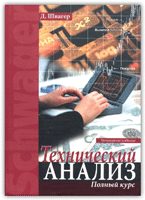 The second textbook worth reading after you've mastered the basics is "Technical Analysis" by Jack Schwager. In this book, the author places a strong emphasis on the practical application of technical analysis.
This book will introduce you to various false patterns, false trend line breakouts, how to correctly set stop orders, and the basics of effective capital management.
Compared to the previous textbook, each of the graphical analysis models is given a lot of attention, showing how the figures work using real examples, and considering entry points.
You will learn about the most popular graphical models that predict a market reversal or, conversely, can confirm the existing price direction.
The author also shares working trading strategies in the textbook, addresses the issue of how to properly conduct optimization, what time frames are suitable for testing, and how to avoid simply adjusting the system to the market and instead conduct real optimization.
 Once you've become familiar with and studied technical analysis in detail, you need to expand your horizons and become familiar with the deeper factors that actually influence price behavior.
Fundamental analysis cannot be completely ignored when trading on the stock exchange, especially when it comes to assets such as futures or stocks.
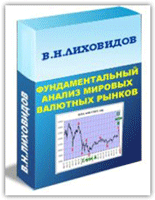
Therefore, the third book we recommend studying is “Fundamental Analysis of World Currency Markets” by Likhovidov.
In this textbook, you will become familiar with the world's major currencies, learn in more detail what the exchange rate is, and become familiar with the main macroeconomic indicators.
The author also places special emphasis on central bank interest rates and inflation, and describes indices and methods for calculating them in more detail.
Overall, this book covers fundamental analysis in its entirety and provides detailed guidance on how to trade and react to the release of various economic indicators.
 When studying the history of successful traders, you will repeatedly come across the thesis that eighty percent of your success depends on psychology, as well as an understanding of the market.
The psychological aspect is crucial in this matter, as most traders lose their deposits precisely because they can't cope with the psychological pressure of the market. This forces them to make one mistake after another and still open new orders.
Therefore, the fourth book we can recommend to you is “The Psychology of Finance,” which is written by the famous hedge fund manager Lars Tweed.
Thanks to this book, you will finally understand that on the other side of the screen there are people just like you, who are ruled by basic feelings and emotions such as fear and greed.
The textbook describes the behavior of all market participants from a psychological perspective, which emotions predominate at a particular market phase, how the crowd behaves at the moment of a trend reversal, and how, based on an analysis of crowd behavior, one can predict further price movements.
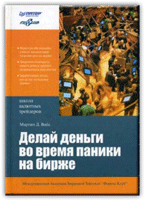 The fifth book we'd like to offer you isn't directly related to teaching a specific type of analysis, but rather reveals all the secrets of long-term stock investing.
In his book, "Make Money During a Stock Market Panic," M. Weiss describes the ins and outs of brokerage companies, gives specific recommendations on choosing securities for investment, makes clear recommendations on choosing stocks and how to avoid duds whose prices are simply inflated.
Overall, this book is a guide for the beginning investor, which will help you avoid common mistakes and build your income through long-term investing.
In conclusion, it's safe to say that all of the books listed above will help you develop your own perspective on the market. In addition to learning, you'll also gain insight into the entire philosophy of trading directly from renowned traders and hedge fund managers.