Leaders in oil production
Many traders avoid CFDs or oil futures because they are deeply convinced that this instrument is quite  difficult to predict, and that delving into the various grades and types is simply a dark forest.
In reality, there is nothing complicated about oil trading, and the forecast itself is practically no different from analyzing fundamental statistics for countries, as is the case when trading currency pairs.
For forecasting and successful trading using oil, a very important factor is timely monitoring of information on the reduction or increase in the volume of black gold production in the main exporting countries.
In order to understand which countries to work with, it is necessary to know the leaders in oil production, which dictate the market price.
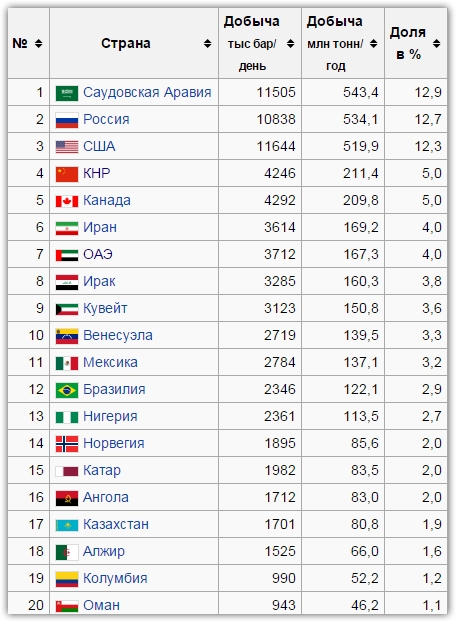 It is the announcements of the country's leaders regarding production cuts or increases that have the most significant impact on global prices. There is a widespread belief that Saudi Arabia's oil reserves are running low, but its long-standing leadership suggests otherwise. Saudi Aramco is the leading oil producer, and its crude oil brand is called Arab Light.
Russia is the second-largest oil producer. According to various sources, Russia and Saudi Arabia consistently share first place, as the difference in production between the two countries is not that great. Russia produced 534 million tons of oil last year, accounting for 12.7 percent of global production.
It's worth noting that despite such a huge production volume, news from this country doesn't have as strong an impact as from Saudi Arabia, but it still has one of the strongest market impacts. Russian oil is very diverse and comes in many different grades. The following grades are regularly produced for export: Urals, Rebco, Siberian Light, Vityaz, Sokol, and Espo.
The United States is the world's third-largest oil producer. In recent years, the US has produced an average of 519 million tons of crude oil, accounting for 12.3 percent of total global production.
It's worth noting that the United States has long been one of the largest importers, but recently large oil reserves were released into the global market, significantly impacting overall pricing. The United States is the owner of the benchmark oil grade WTI.
China ranks fourth in oil production. Last year, the country produced 211 million tons of oil, accounting for approximately five percent of global production. It's worth noting that in 2016, China was the largest oil importer.
This approach is driven by the fact that low global prices allow China to build up huge reserves and refine oil into fuel for profitable resale for its own economy.
Canada ranks fifth in the world in oil production. In recent years, Canada has produced an average of 209 million tons of oil annually, accounting for 5 percent of total global production. Canada is the largest oil exporter to the United States, and the price of oil has a significant impact on the strength of its currency.
It's also very important to track OPEC oil production data. The countries that make up this organization can be seen in the image below:
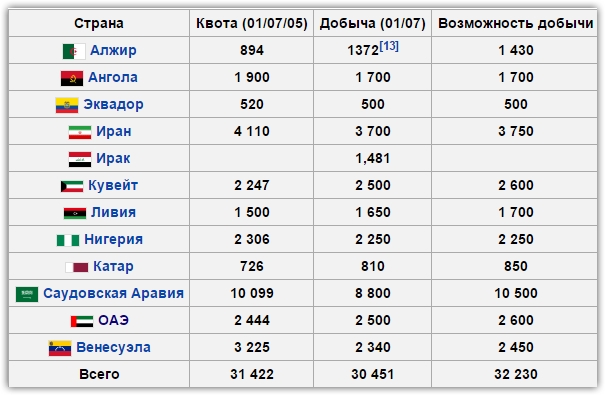 Analyzing the world's leading oil producers, as well as tracking news from OPEC countries, will allow you to understand oil pricing and make your own forecasts.
At the same time, there is a clear direct correlation between oil prices and the exchange rates of national currencies of the countries that are the largest oil producers.
Read about the relationship between exchange rates and oil prices here: http://time-forex.com/interes/dollar-neft