Trading: Why it's important to control your actions, not your emotions.
Success in the Forex market doesn't depend solely on the system or strategy you use; it largely depends on your mindset and how you react to market changes.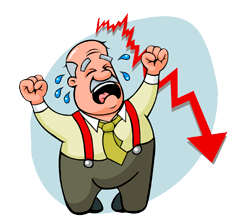
There are now countless market analyses and hundreds of opinions available online. Hundreds of websites will tell you how the market will behave next, and they'll convince you that their trading strategy is the most profitable.
Being knowledgeable doesn't necessarily mean being a successful trader. While the information you gain is crucial for market analysis and decision-making, achieving success requires much more.
Having studied and absorbed all the relevant information, a trader seeks to apply it in practice. Typically, mastering something new is accompanied by a mixture of excitement and fear. In the best-case scenario, the trader makes several successful trades and gains greater confidence.
This result will encourage you to place more trades and perhaps serve as the basis for more aggressive trading tactics... However, you will quickly understand why over 90% of traders fail.
Being a successful trader and being able to control your emotions requires absolute discipline... or so we believed until now. For years, the industry has held the belief that traders fail because they allow their emotions to interfere with their trading decisions.
Neuroscientists then conducted a study examining the brain scans of risk-takers (poker players, traders, and the like). They discovered that all decisions are influenced by the emotions prevailing at the moment. How we feel in the moment influences what we think and the decisions we make.
Moreover, in an attempt to determine whether traders think rationally about each trade or follow their intuition, researchers from the California Institute of Technology evaluated brain scans of people making trading decisions. The results of this experiment showed that traders most often listen to their "inner voice," regardless of the amount of information they have collected and analyzed.
Here's another interesting twist to this story: research has shown that we can only make a few—no more than two—"conscious" decisions in a row. Therefore, spending hours in front of charts, monitoring every indicator movement, won't guarantee successful trading.
Experts TradingForex practice and recommend using the following techniques:
1. Avoid visual and sensory habituation by moving your eyes in circles and changing your physical position.
2. Get into the habit of taking breaks from the market (including your computer). This, in turn, can lead to increased investment volume.
3. Manage stress by doing breathing exercises to oxygenate your brain.
In other words, doing a short physical activity, such as going to the gym or going for a walk in the middle of the day, or even in the middle of a trade, can help boost your mental energy and help you calculate the most profitable exit point.
In conclusion, the connection between the body, feelings, and emotions is undeniable in the decision-making process, so trying to control emotions alone is futile. The only thing we need to control is our actions. Each of us can experience feelings at any moment but not take any action in response. Moreover, this happens all the time.
What we feel or experience in our emotional state should be taken as data and carefully analyzed. It would be a mistake to ignore this data instead of learning how to effectively use it to achieve trading success.
When you experience setbacks, you need to follow a specific routine that can prevent the situation from worsening. The more you practice these actions, the more likely they are to become a habit. The challenge lies in adapting such a routine into your typical daily routine, which will help you remain mindful of the actions you take.