Stock market patterns
Despite what various analytical agencies and university professors say, all stock market trading is based on patterns. 
Yes, you can make short-term or long-term forecasts based on macroeconomic data and take market trends into account, but one scandal can reverse a trend and invalidate any forecast.
Therefore, many traders don't engage in analytics in the traditional sense of the term, but rather look for stock market patterns.
And once they find them, they try to use them to forecast future trends and plan upcoming trades.
Therefore, it's much easier for a beginner to build a strategy based on patterns than to learn how to analyze the market or pay an analytical agency for a forecast.
Pullbacks after a sharp decline – The stronger the fall in stock prices after bad news, the stronger the correction that follows.
We all remember how Volkswagen's stock plummeted in 2015 after the diesel car scandal, and how the price then rose by 40% in just three months, partially offsetting the drop
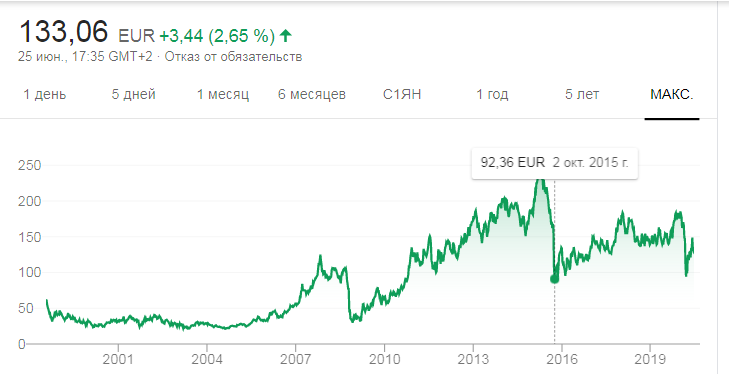 Professional investors often wait for a security to bottom after a news release before making a purchase.
Mergers and acquisitions —information about two companies merging or a larger company acquiring a smaller one—lead to a rise in the price of those companies' shares.
Such news isn't always publicly available, but when it does, the opportunity is unseen.
Indirect factors —or anything that can indirectly impact profits—consider the following: For example, rising copper prices increase the cost of producing electric motors, which means they will reduce profits for the companies that manufacture them.
Therefore, short positions can be opened before the publication of financial statements by companies that use a lot of copper. A similar pattern can be found with oil prices and Gazprom shares.
There are many such relationships; the key is to think logically and open new positions in a timely manner.
Pre-reporting period – a decline in price occurs if the company issuing the report is likely to end the reporting period with a loss, while conversely, stock prices rise if the quarter was successful and profitable.
For example, this happened with Amazon shares during the coronavirus pandemic; even before the report was published, it was clear that the company would end the first quarter of 2020 with a profit. Sales increased 33% compared to the same period in 2019.
Amazon shares surged ahead of the quarter's close, as most traders were hoping for a strong earnings result.
Therefore, by analyzing the company's performance during the reporting period, one can draw conclusions about what's in store for the stock before the earnings release. However, one should be prepared if the earnings fall short of investor expectations, as this could cause a decline in the stock price.
Stock market patterns allow one to develop a simple trading strategy based on news and the ability to draw the right conclusions from the information received.
It should be noted that the stock market is also often subject to patterns that can be found on Forex - http://time-forex.com/interes/zakonomernosti-foreks