Arms stocks, war or profit
During times of war and geopolitical instability, markets often behave nervously: capital flows out of risky assets, indices decline, and investors take profits. But there's one sector that traditionally fares differently: the defense industry.
This is explained simply: state budgets for security and weapons are not reduced during such periods, but, on the contrary, they increase sharply.
Orders are becoming long-term, contracts are multi-billion dollar, and companies' profits are becoming more predictable.
I am not a supporter of investing in such assets from a moral point of view, but it would be a mistake to ignore their behavior in the market.
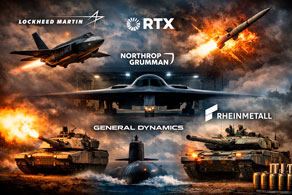
Let's take a look at five key companies and see how they responded to real events.
Top 5 Defense Stocks
Let's start by looking at how stocks have reacted to military conflicts in the past.
| Company | Ticker | Dividend yield | Growth in times of conflict | Peculiarity |
|---|---|---|---|---|
| Lockheed Martin | LMT | ~2.5–3% | +20–25% (2022) +30–40% (2024–2025) | Leader in aviation and air defense |
| RTX | RTX | ~2–2.5% | +50–60% (2024) | Air defense + civilian business |
| Northrop Grumman | NOC | ~1.5–2% | +40–50% (2022–2025) | Space and technology |
| General Dynamics | GD | ~2–2.5% | +30–35% (2023–2026) | Tanks and fleet |
| Rheinmetall | RHM | ~1–1.5% | +400–500% (2022–2026) | Europe's main beneficiary |
Lockheed Martin (LMT) is the undisputed leader and the "gold standard" of defense. Its flagship product is the fifth-generation F-35 fighter, for which orders are slated for years to come.
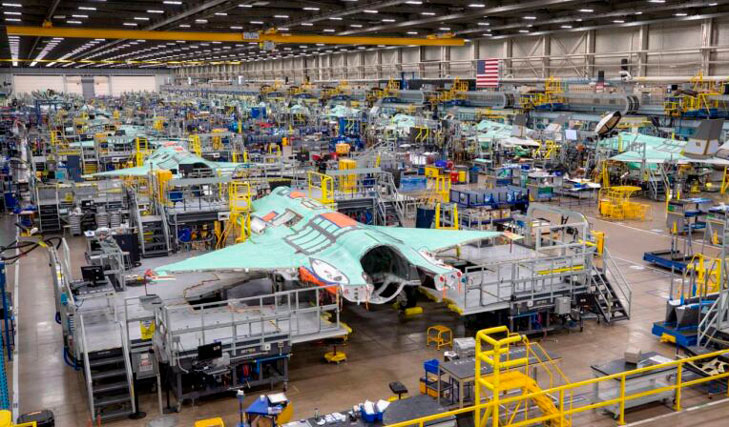
Conflict Response: With the outbreak of hostilities in Ukraine in February 2022, shares rose by approximately 20-25% in a short period. Then, in 2024-2025, amid tensions in the Middle East and rising orders for HIMARS systems and PAC-3 missiles, shares gained another 30-40%.
Why it's growing: A near-monopoly position in high-tech weapons and a close connection to the Pentagon budget.
RTX Corporation (RTX) – The company manufactures Patriot systems, Tomahawk missiles, and aircraft engines.
A historical example: Against the backdrop of conflicts in the Middle East and the need to replenish NATO arsenals, demand for air defense systems is sharply increasing. Shares have shown strong momentum in recent years, including spikes during periods of active military action.
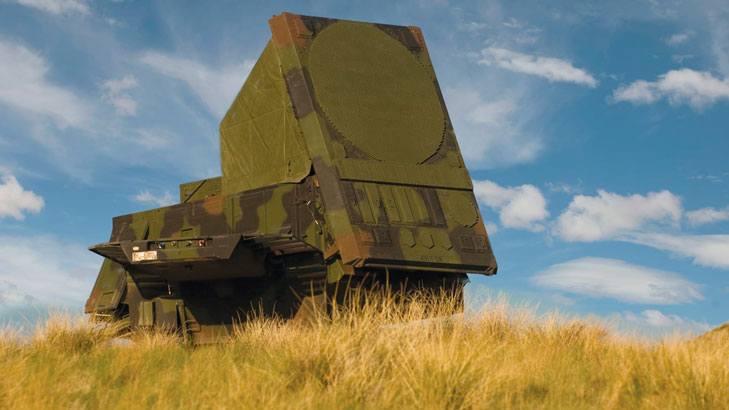
An interesting point: Having a civilian business (Pratt & Whitney) mitigates risks and provides stability even outside of military phases.
Northrop Grumman (NOC) - The company is betting on the "war of the future": drones, space, cybersecurity and strategic bombers.
Dynamics: During periods of heightened geopolitical tensions and talk of nuclear deterrence, stocks demonstrate steady growth. Contracts for the B-21 Raider and space programs support the long-term trend.
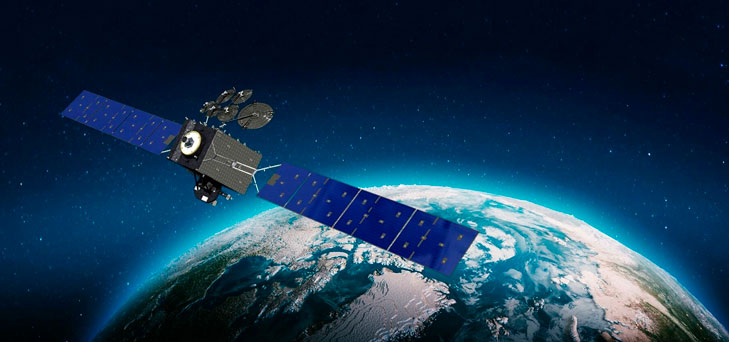
The special feature: This is not so much a “war today” as an investment in the military technologies of tomorrow.
General Dynamics (GD): Classic heavy equipment: Abrams tanks, armored vehicles, submarines.
Historical context: The company has demonstrated stable growth for decades. Even without any sudden surges, it remains one of the most reliable in the sector. During periods of military rearmament in Europe and the US, the stock receives an additional boost.
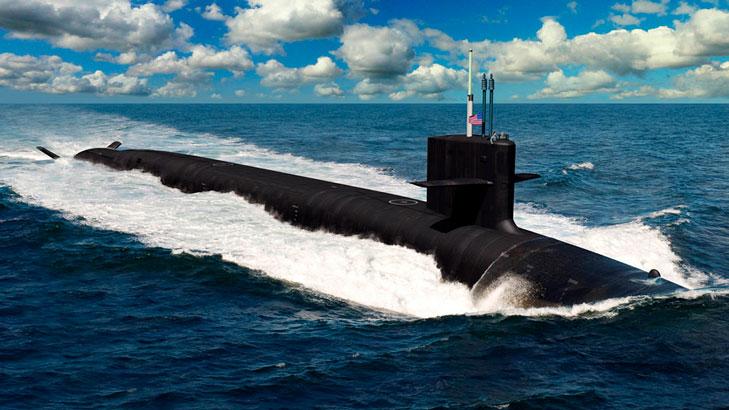
Strength: Diversification – from land-based equipment to the navy.
Rheinmetall (RHM) is Europe's leading arms manufacturer and the recipient of most of the EU's defence budgets.
Explosive growth: After 2022, the stock skyrocketed as the market reassessed the importance of European defense. A sharp increase in orders for ammunition, armored vehicles, and air defense systems made the company one of the fastest-growing in Europe.
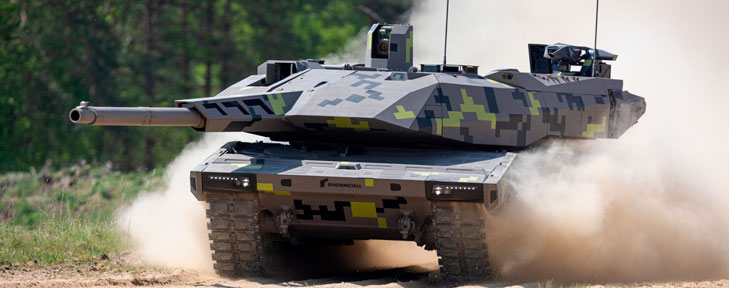
The reason: EU countries began large-scale rearmament, and Rheinmetall found itself at the center of this process.
How did military actions behave during conflicts?
To summarize historical observations:
- During periods of active military phases, defense stocks often outperform the S&P 500 index by 15-30% per annum.
- the most powerful movements occur in the first months of the conflict (reaction to news and budgets)
- then growth becomes more gradual and depends on contracts
The key feature of these stocks is that they act as a kind of "insurance element" in a portfolio. When traditional sectors (technology, retail, services) suffer from uncertainty, the defense industry receives an influx of budget funds.
History shows that during periods of conflict, such securities are capable of not only preserving capital, but also outperforming the market.
But there's a downside: this sector is completely dependent on politics. Any easing of tensions, peace agreements, or cuts to military budgets could quickly reverse the trend.
Therefore, such investments are not a “perpetual strategy,” but a tool that works under specific market conditions.