Investing during a crisis: where to invest your savings
Many investors try to sell all their assets as soon as the markets start to fall, believing that the best strategy during a crisis is to hold money in regular currency.

Most of them do not invest the cash they receive anywhere, but simply convert it into Swiss francs or keep it in US dollars in a bank account.
But an economic crisis is not only a fall in stock prices, but also high inflation, which in a couple of years can devalue your money by 10-20%, and the purchasing power of even the Swiss franc falls.
So if you're unsure about the stock market's prospects, you might be interested to know what professional investors invest in during crises.
Gold and precious metals
When inflation rises, currencies fall, or geopolitical risks intensify, investors begin to actively buy gold, which often leads to an increase in its price.
A practical example can be seen in the events of recent years. During the 2020 pandemic, the price of gold rose to historic highs. A similar situation was observed during the escalation of geopolitical conflicts, when investors massively transferred part of their capital into precious metals.

There are several ways to invest in gold:
- purchase of physical gold (bars or investment coins);
- buying gold ETFs;
- shares of gold mining companies;
- gold futures or CFD trading.
For a private investor, the easiest option is usually ETFs or shares of gold mining companies, as they allow for small investments and are easily traded on the stock exchange.
Stocks of companies in the defense industry
Even during a crisis, there are companies whose product demand remains virtually constant, guaranteeing both dividend payments and a stable share price.
These include:
- pharmaceutical companies;
- food producers;
- telecommunications companies;
- energy sector.
A practical example can be seen during economic downturns: people continue to buy medicine, pay for mobile phone service, and buy food.
For example, during crises, shares of pharmaceutical companies or large telecommunications operators often show resilience, as their business is virtually independent of the economic cycle.
Government bonds
Another popular instrument during a crisis is government bonds, a traditional asset for risk insurance.
Such securities are considered relatively reliable, especially when it comes to debt obligations of economically developed countries.
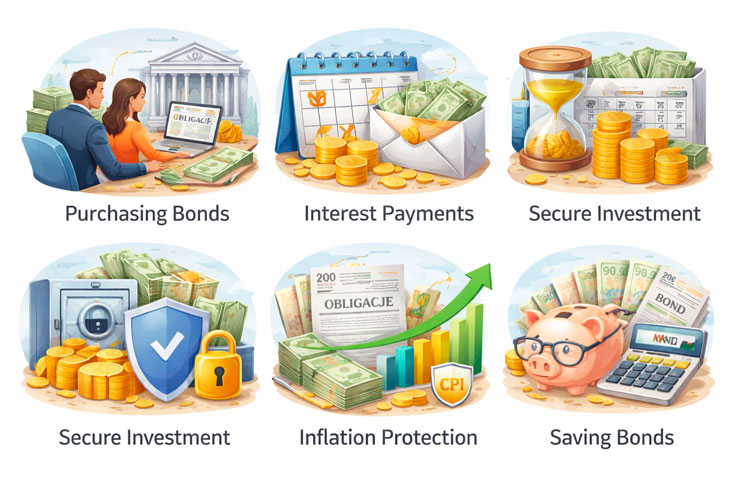
When stock markets fall, many investors begin to shift some of their funds into government bonds to preserve capital and receive fixed income.
A practical example is the situation in financial markets during crises, when government bond yields fall due to high demand, while their prices rise.
For a private investor, access to such instruments can be obtained through:
- purchase of bonds on the stock exchange;
- ETF funds on bonds;
- fixed income investment funds.
Investment property
During times of inflation, real estate is also often seen as a way to preserve capital.
Even if house prices decline temporarily, real estate values typically rise in line with inflation over the long term.
In addition, the property can generate regular rental income.
A practical example is buying an apartment to rent out. Even if the property price hasn't appreciated for several years, the rental payments can provide a stable cash flow.
Diversification is the main strategy in a crisis
The most common mistake investors make during a crisis is trying to pinpoint one "perfect" asset. Professional investors often use a different strategy: .

This means distributing capital across different assets. For example:
- part of the funds in gold;
- share in dividend shares;
- part in bonds;
- part in cash for new purchases.
This approach allows you to reduce risks and survive even strong market fluctuations.
Crises are always accompanied by panic in financial markets, but it is during such periods that the most interesting investment opportunities arise.
The history of financial markets shows that after every major crisis, the economy eventually recovers and the value of high-quality assets begins to rise again.
Therefore, the main task of an investor during a crisis is not to panic, keep a cool head, and wisely distribute capital between various investment instruments.