What's riskier: buying stocks through a broker, ETFs, or stock indices?
Risk assessment is one of the key aspects when making investments; one must understand how risky a particular asset is.

Moreover, the level of risk may depend not only on the asset itself, but also on the method through which it is acquired.
Take buying stocks, for example. Today, you can buy stocks through a broker (direct ownership) or by purchasing shares of ETFs and stock indices.
At first glance, it seems that all of the listed options are absolutely safe and the risk depends only on the value of the shares of the companies being purchased.
But in reality, everything is not quite so. First, let's figure out what each of the listed options represents:
Options for purchasing shares:
| Investment option | How does this work | Intermediary/bankruptcy risk | Features/Notes |
|---|---|---|---|
| Buying shares through a broker | You own shares directly, the data is entered into the register | Minimal risk: if a broker goes bankrupt, shares can be easily transferred to another | Full ownership of shares, participation in voting |
| Index funds | The fund follows the index and owns a portfolio of stocks | Small/unregulated funds have theoretical risk, large funds are safe | Convenient for diversification, investing through shares, not directly |
| ETF on stocks | The share is owned by a fund that invests in a portfolio of shares | Risk is minimal for large ETFs, and there is some risk for small/synthetic funds | High liquidity, quick buy/sell, low fees, diversification |
Purchasing shares on the stock exchange is usually done through a broker, after which the information is entered into the register, and you become the actual owner of a share of the company. You gain the right to participate in decision-making.
In the event of a broker's bankruptcy, your shares are transferred to another broker, and you do not lose anything, which ensures maximum security.
Stock indices – you can’t invest directly in stock indices; you invest through index funds, which replicate a stock portfolio.
In this case, the securities are registered to the fund and in the event of its bankruptcy there is a theoretical possibility of losing all invested funds.
ETFs on stocks are essentially similar to index funds, but they offer greater liquidity, allow for quicker purchases and sales, and have lower commissions.
By purchasing a stock ETF, you own shares of a company that invests your money in a stock portfolio, thereby providing diversification. If the company goes bankrupt, you lose your money.
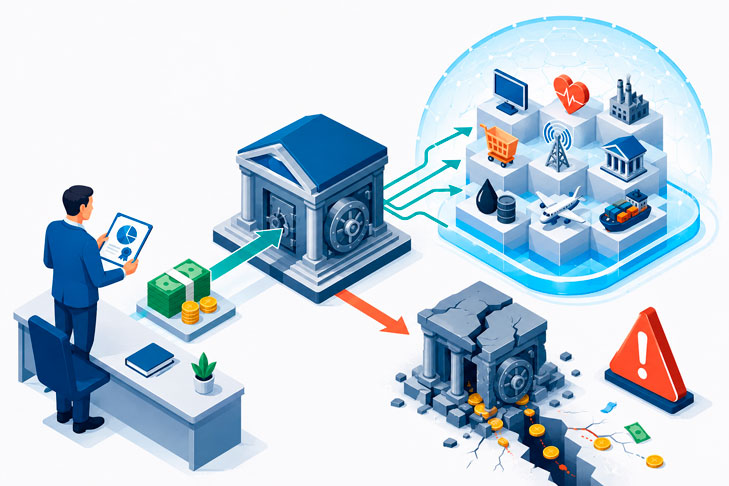
ETFs and index funds are now considered a fairly reliable investment option in the stock market; according to the rules, investors' funds must be separated from the management company's funds.
But have there been bankruptcies of similar companies in history, causing investors to lose money?
Historical examples:
- Bear Stearns ETF (2007–2008): Some synthetic ETFs targeting mortgage-backed securities suffered significant losses due to counterparty failures during the crisis.
- A number of small emerging market thematic ETFs have closed after years of weak liquidity, with investors receiving liquidations but often at a loss due to falling asset prices.
- Classic large ETFs (SPY, VOO, IVV, EEM) have never gone bankrupt or resulted in a complete loss of investors' money.
Conclusion: Among the methods of investing in shares, the most reliable from the intermediary's point of view is direct ownership through a broker, since the shares are registered to the investor and are easily transferred in the event of the broker's bankruptcy;
ETFs and index funds are also considered safe and convenient for diversification, but small funds with questionable regulations should be avoided.