Investment risks
It seems that the most important thing for an investor is to find the most suitable investment, and then just calculate the profit.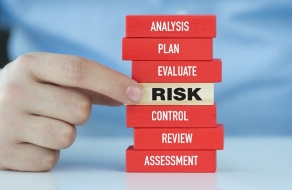
But in reality, there is such a thing as investment risks, which are inherent in any type of investment activity.
That is, no matter what you invest in, there is almost always a risk of losing part or all of your investment.
Therefore, it is always better to prepare for the unexpected than to deal with its consequences later. First, let's look at how these risks are classified.
Types of investment risks
Credit risk is the likelihood that the other party to a transaction will default on their obligations. The company whose shares you bought will declare bankruptcy, the government will refuse to pay its debts, or the bank will freeze your deposits.
Liquidity risk is the complete inability to sell a previously purchased asset. For example, your real estate may be unable to find a buyer, or previously purchased securities may not be trading.
Technical risk is the inability to close a transaction due to technical issues. Your internet connection may be down, your computer may break down, or you may simply be unable to physically go to the bank to close your deposit in person.
Exchange rate risk is a drop in the price of a purchased security or other asset, resulting in a loss instead of a profit.
How can these risks be addressed?
Any problem is easier to prevent, so let's look at measures you can take at the initial stage of investing to at least mitigate potential risks. To make things clearer, let's move on to specific examples:

• Bank deposits – distribute funds among several banks, ideally located in different countries. The deposit amount should not exceed that guaranteed by the deposit guarantee fund.
Currently, this amount is 700,000 rubles in Russia, 200,000 hryvnia in Ukraine, and 100,000 euros in European banks.
You can also insure your deposit with an independent insurance company; such insurance is inexpensive but will provide you with additional protection.
• Securities – when purchasing them, it is advisable to create a portfolio of securities, thereby diversifying risks. And in some cases, it is even better to hedge.
• Real estate – try to acquire more liquid assets, which are always in high demand.
For example, despite the higher cost per square meter, a 1-room apartment is always easier to sell than a larger apartment.
• Minimizing technical risks – achieved by creating alternative methods of communication, that is, in addition to landline Internet, a mobile phone should always be available. In addition to a computer, it is advisable to install the trading platform on a smartphone.
Reducing investment risks has always been one of the main goals of any investor; every day, thousands of people lose their money simply because they did not pay due attention to this issue.