Where is the best place to trade cryptocurrency: fees, taxes, verification
Cryptocurrency trading has long ceased to be something unusual—it is now accessible to almost everyone.

But choosing the platform where you will buy and sell cryptocurrency is of key importance, so this issue should be approached with the utmost seriousness.
The right choice affects not only your income, but also your security, commission size, withdrawal options, and even whether you'll face tax issues later.
Some platforms are convenient but expensive. Others are profitable but require complex verification. At the initial stage, it's important to figure out which is the most profitable and easiest to trade.
Classic crypto exchanges
There are centralized and decentralized crypto exchanges, each with its own unique characteristics.

Centralized exchanges (CEX) are the most popular, such as Binance, Bybit, OKX, MEXC.
Pros:
- Low fees - around 0.1% per trade (may be reduced when using an exchange token).
- User-friendly interfaces, mobile applications, customer support.
- Possibility of deposits and withdrawals in fiat currency.
Cons:
- Mandatory verification (passport, selfie, proof of address).
- Reporting to tax authorities (in EU countries and other regulated jurisdictions).
- Storing funds on an exchange carries the risk of being blocked or hacked.
Decentralized exchanges (DEX) operate directly through a crypto wallet without registration, such as Uniswap and PancakeSwap.
Pros:
- Complete anonymity, no verification.
- The wallet is completely under the owner's control—no one can block funds.
- There is no centralized storage of assets.
Cons:
- Commissions are higher (from 1% and more + network commission).
- No fiat currency support.
- Limited choice of tokens and weak liquidity in some pairs.
- Lack of technical support and protection in case of an error.
Stock Brokers: MetaTrader and CFDs
Brokers allow cryptocurrency trading through platforms like MetaTrader 4/5. This isn't direct cryptocurrency purchase, but rather trading contracts for difference (CFDs).
Pros:
- Leverage for cryptocurrencies up to 1:100 and higher.
- Very low commissions - from 0.01% (in the form of spreads).
- No verification required with some brokers.
- Lack of reporting to tax authorities (in most jurisdictions).
Cons:
- When a position is carried over overnight, a swap is charged —a commission of approximately 0.05% per day.
- You don't own the cryptocurrency, you only earn on its exchange rate.
- You can't withdraw cryptocurrency to an external wallet - you can only close the transaction and receive fiat.
This format is especially convenient for active traders who open many trades during the day.
Revolut: Convenient, but very expensive and controlled
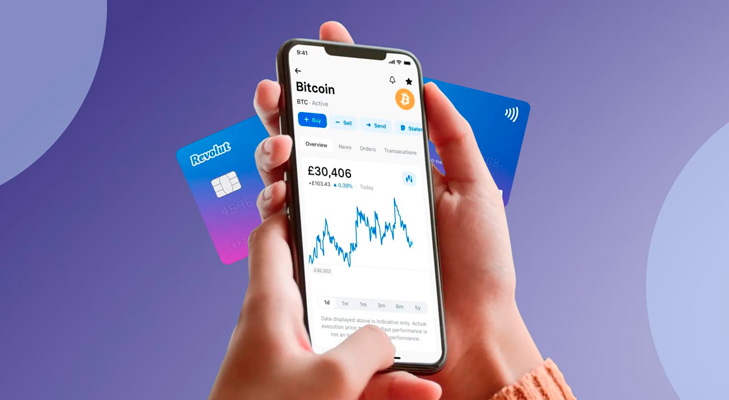
The Revolut platform allows you to purchase cryptocurrency directly in the mobile app. This is convenient for both new users and those who already use Revolut as a bank.
Pros:
- All in one: mobile banking and crypto purchasing.
- Simple and quick purchase without having to understand terminals.
Cons:
- Commissions of up to 6% are among the highest on the market.
- Full transfer of data to tax authorities.
- Does not work in all countries.
Revolut is only suitable for a small trial purchase; it's not suitable for regular trading.
Choosing a platform for cryptocurrency trading largely depends on your goals and trading style.
| The site | Leverage | Commissions | Verification | Withdrawal of cryptocurrency | Transfer of data to tax authorities |
|---|---|---|---|---|---|
| Binance, OKX, and others (CEX) | Up to 20x | ~0,1% | Yes | Yes | Yes |
| MetaTrader (CFD brokers) | Up to 100x | From 0.01% + swap | Yes | No | No |
| Uniswap, PancakeSwap (DEX) | No | 1–3% + network | No | Yes | No |
| Revolut | No | Up to 6% | Yes | Yes (within the service) | Yes |
If you're planning long-term investing, it's best to use centralized exchanges like Binance or OKX—they offer stability, user-friendly interfaces, and access to a large number of coins.
For those who prefer active trading and want to use leverage, crypto CFD brokers , such as those available through the MetaTrader platform.
If simplicity is your priority and everything should work out of the box, then you might want to consider Revolut, although it's worth keeping in mind its high fees and withdrawal restrictions.
Whichever method you choose, it's important to understand the fees, taxes, and verification requirements in your country in advance. This will help you avoid unpleasant surprises and protect your money.