Crypto deposit in Tether as an alternative to a regular bank deposit
Despite new investment options, the most popular was and remains a bank deposit.

Most people choose deposits because of their simplicity and reliability. The terms and conditions are clearly described, and you can immediately calculate how much money you'll receive as a result of your investment.
Availability of funds also plays a significant role; most deposit agreements can be terminated before the end of the term and your money can be quickly returned.
After the emergence of cryptocurrencies, it is quite logical that sooner or later cryptocurrency deposits will also appear.
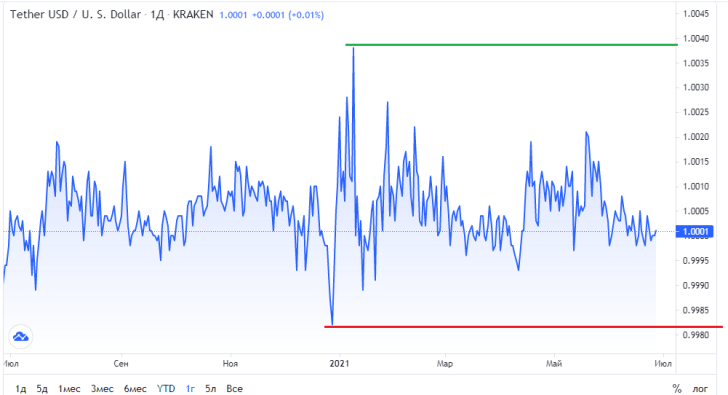
As can be seen from the chart, the exchange rate of the most popular virtual currency, Tether, fluctuates between 1.004 and 0.9980 US dollars, which is almost equal to 1 dollar without taking into account tenths of a cent.
This is what is used for deposits on most exchanges.
On average, the interest rate on a deposit is 6% per annum, which is almost equal to the rates on foreign currency deposits in Russia or Ukraine, but several times less than the rates in Europe or the United States.
So, at first glance, it seems like a cryptocurrency deposit would be a pretty good investment. Moreover, no one will monitor your profits or require you to pay taxes.
Disadvantages of cryptocurrency deposits
First of all, these are the overhead costs of replenishing cryptocurrency wallets or withdrawing Tether to bank cards.
For example, the best offer for withdrawal to a card involves a 10% commission:
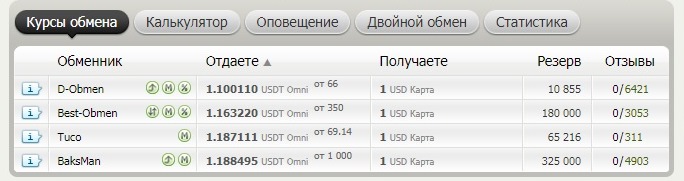
Topping up your Tether wallet costs 12%, meaning you'll pay over 20% for deposits and withdrawals, and earn only 6% per year.
There are also other disadvantages, such as the need to create a special wallet for transactions and the low reliability of the crypto exchanges where the deposit is placed.
Currently, a cryptocurrency deposit is only suitable for those who regularly use stablecoins for payments and don't plan to convert them to real currencies. Otherwise, the overhead costs will exceed the deposit accruals.