How will the US aid freeze affect Ukraine's economy?
Since the outbreak of full-scale war, Ukraine has been heavily dependent on international financial support, particularly from the United States, which has provided substantial military, humanitarian, and budgetary aid.
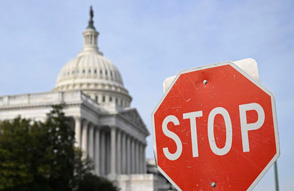
These funds not only made it possible to purchase weapons and ammunition, but also to cover critical government expenditures, including pensions, civil servant salaries, and infrastructure support.
However, in March 2025, US President Donald Trump ordered a suspension of all military aid to Ukraine, citing the need to review relations and advance peace talks on his terms.
This creates serious risks for the Ukrainian economy, which is already under significant pressure due to the war and destroyed infrastructure.
Without external funding, the Ukrainian government will face the need to urgently revise its budget policy and find alternative sources of expenditure
Financial implications: increased spending and borrowing
The end of American support will force Ukraine to increase its own defense spending, as the need for weapons and ammunition remains extremely high.
This will lead to a reallocation of the budget in favor of the military sector at the expense of spending on other sectors of the economy, such as education, healthcare, social protection and infrastructure projects.

The additional burden on the budget will force the government to seek new sources of financing, which will inevitably lead to an increase in public debt. Ukraine is already actively using borrowing mechanisms through the IMF, the European Union, and the domestic bond market.
However, further debt growth could lead to a deterioration in the country's credit rating and an increase in interest rates on new loans.
Increase in the discount rate and the threat of emission
The National Bank of Ukraine (NBU) will be forced to respond to the new economic reality.
In the context of reduced external funding and increased government spending, the following measures are possible:
- Raising the NBU's to curb inflation and stabilize the hryvnia will lead to higher borrowing costs and a decline in business activity.
- Activation of the domestic borrowing market, which will lead to an increase in bond yields and an increase in the debt burden.
- In the event of a critical budget deficit, the printing press will be launched, which will sharply increase inflation risks and lead to the devaluation of the hryvnia.
Currency risks: hryvnia devaluation and rising inflation
One of the most serious consequences of the termination of American aid will be pressure on the hryvnia exchange rate.
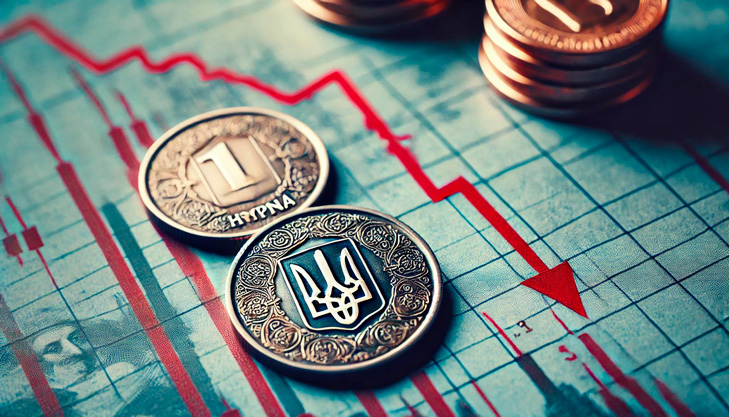
A decrease in the influx of dollars into the country will reduce the volume of foreign exchange reserves, making it difficult to maintain a stable exchange rate for the national currency.
In conditions of a lack of financial resources, the following scenarios are possible:
The fall of the hryvnia against the dollar and eurowill lead to higher prices for imported goods and higher prices.
Inflation and declining purchasing power. The external financing deficit and the possible issuance of the hryvnia will accelerate inflation, which will hit the most vulnerable segments of the population particularly hard.
The end of American aid will pose a serious challenge to Ukraine's economy. Without external support, the government will be forced to increase military spending, take on new loans, raise interest rates, and even issue hryvnia.
These actions will cause a fall in the national currency exchange rate, an increase in inflation, a reduction in the purchasing power of the population, and a reduction in funding for key civilian sectors.
In the long term, such events could destabilize the economic and political situation in the country, complicating its recovery after the war.