Trader Boone Pickens. Oil and gas raider
As their capital grows, any self-respecting trader begins to buy up shares in large companies in order to secure safe exit routes from risky trading.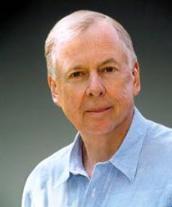
However, in order to gain leverage and influence over companies, many are forced to resort to so-called financial raiding.
When having a certain block of shares and the support of the company's staff, the process of merging companies and taking over the company begins.
It's crucial to understand that corporate raiding in the stock market has nothing in common with the violent takeovers of factories and companies we see in real life, as all events occur within the law.
One of the most famous raiders in the oil and gas industry is trader Boone Pickens, whose net worth currently exceeds $1.2 billion.
From childhood, Boone Pickens strove for financial independence from his parents. While in high school, he earned a comfortable part-time job delivering newspapers on several streets.
One day, while cleaning the future tycoon's room, his mother discovered $258 he'd been saving for himself under his bed. His parents were amazed at the young worker's wealth and, despite Boone's reluctance, forced him to take the money to the bank and deposit it in a safety deposit box.
Pickens himself has repeatedly noted in his interviews that he has almost never needed money, since he knew how to earn money from childhood.
Education. First job
Having successfully graduated from high school, he chose the local university, and so he successfully entered Oklahoma State University.
The field of study concerned geology, and the university trained excellent prospectors for oil and gas exploration, without which it is difficult to imagine the development of the oil production industry.
Having earned a degree in geology, he had ample opportunities, as Texas had long been famous for its vast deposits of black gold.
In 1951, the young specialist joined Philips Petroleum as an exploration geologist. The work experience he gained would prove to be a tremendous asset in developing his own business.
After working for the company for several years, Boone Pickens repeatedly encountered the company's bureaucratic machine, which did not allow him to realize his potential.
That's why, having saved up a small sum of money, he buys an inexpensive car and says goodbye to the company forever.
Thanks to the wheels, Boone travels around many states, exploring all sorts of oil companies, oil and gas fields, and mentally cobbling together the future concept of his business.
Own business
Upon returning from his travels, Boone had an excellent plan for setting up his own oil production business, and the discovered deposits allowed him to get off to a quick start.
At the age of 26, he found two business partners and founded the Mesa Petroleum company, where he began actively mining black gold.
1983 was one of the most difficult years for all oil companies. The crisis and the sharp decline in oil prices devalued the shares of oil producing and refining companies.

Instead of being backed into a corner, Boone Pickens begins to actively acquire companies.
Thus, having bought up 13 percent of the shares of Cities Service as a result of a takeover battle with the Gulf and Occidental Petroleum Company, he managed to make a profit of 32 million dollars.
A year later, Boone Pickens began an active takeover of Gulf and was able to earn over $200 million.
In 2004, Boone Pickens became interested in the natural gas market and created a company called Clean Energy Fuels.
Boone clearly understood that gas would soon begin to displace gasoline, since its price is significantly lower, while cars run just as well on it.
This is why the company began rapidly building gas stations across the country, allowing it to capture almost 60 percent of the market.
Boone Pickens made his first billion when he was in his seventies, but he continues to expand his business to this day.
It's also worth noting that Boone Pickens is very generous with his money, donating it to various charities, primarily those focused on healthcare and education.