Trader Kweku Adoboli: The main antihero of the modern stock market
Many exchange-traded funds and investment banks fail not because of weak market conditions, a crisis, or external adverse factors, but because of the fraudulent actions of their own traders.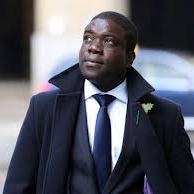
The fact is that the overwhelming majority of traders work in financial organizations for a salary plus a bonus for excess profits.
At the same time, they earn millions for the company owners, and their turnover amounts to billions of dollars.
Naturally, at a certain point, human greed begins to take over the trader, leading to unauthorized opening of positions and the desire to use the company's resources for personal gain.
However, it's not only traders who are to blame, as sometimes company management forces traders to cross the line of legality just to earn extra income.
The latest debate over increased regulation of financial markets has been sparked by the blatant fraudulent actions of trader Kweku Adoboli, whose actions nearly bankrupted Switzerland's largest bank, losing more than $2.3 billion.
Before his fateful events, Kweku Adoboli was something of a dark horse in the financial world that no one knew about.
The future antihero of the stock market world was born in Ghana on September 15, 1980. It's worth noting that Kweku Adoboli spent his childhood constantly on the move.
The fact is that his mother and father were phenomenal diplomats and worked at the UN, so the family constantly had to move, representing the interests of their own country in Syria and Iraq, then in Israel and Great Britain.
Education and career
Constant international travel, coupled with his parents' vast financial resources, allowed Kweku Adoboli to remain in the UK at the age of 12. Adoboli received his early education at a private school in Yorkshire.
Having an excellent basic education at a private school, it is not difficult for him to enter the University of Nottingham.
Kweku Adoboli had special abilities and was a diligent student, so the finance department was an excellent start for his future career.
His first and last job was at the UK branch of the Swiss bank UBS. The most interesting thing is that he was hired as a regular intern. However, thanks to his phenomenal abilities, Kweku quickly began to rise through the ranks.
In his mid-career, his monthly salary was $12,000, and by the end, it was $350,000. Kweku Adoboli was a risk hedging trader, specifically, selecting highly correlated assets and profiting from the so-called delta.
In 2011, Kweku Adoboli was accused of unauthorized transactions that cost the bank $2.3 billion. As it later turned out, all reports hedging were falsified by him, and the trader constantly exceeded the established limits.
In court, Kweku Adoboli claimed that all transactions were conducted with the consent of management, and that violations for the sake of profit were not simply approved, but were rewarded with bonuses.
Kweku also claimed in court that this was not the first force majeure situation the bank had encountered, and that under pressure from management, he had almost caused the bank 12 billion in losses, but thanks to favorable market conditions, he was able to close the deals profitably.
Following the news of the theft, UBS shares fell by more than 10 percent, and in order to keep the bank afloat, the bankers had to make huge staff cuts, namely, more than 3,500 employees were laid off across various bank branches.
The bank remained afloat, but suffered huge reputational losses.
During the court hearing, it emerged that two more people were involved in the scheme, but the company concealed this fact by firing the employees retroactively. Naturally, Adoboli was blamed for everything, and he was sentenced to seven years in prison for fraud.
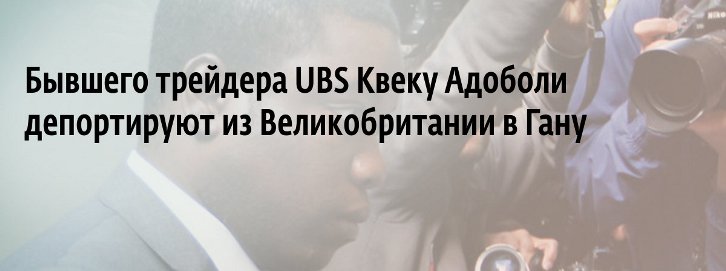
In 2015, Adoboli was released, but British authorities immediately sought to deport him to his home country. Penniless, Kweku and his friends applied to a crowdfunding platform to raise funds to cover legal fees and an appeal.
In less than two days, $11,000 was raised, but despite this, the court case was lost, and Kweku was deported. UBS was also fined £30 million by the regulator for lax employee regulation, which resulted in losses for the bank's depositors.