Why the trailing stop didn't work: reasons and possible consequences
There are several options for insuring stock exchange transactions against excessive losses in the event of an unfavorable scenario.

The most famous of them is setting a stop loss, and the most effective is a trailing stop.
Trailing stops allow you to not only limit losses, but also maximize profits from a successful trade.
But there are situations in which this closing order does not work, and the transaction closes with minimal profit or even with a loss.
What are the reasons for this phenomenon and how can it be made less likely?
The main reasons why trailing stops fail:
A disabled trading platform is the most common scenario; this order only works when the trading platform is running. So, if you turn off your computer, the trailing stop will definitely not work.
For this reason, many traders use VPS virtual serverson which trading platforms are installed for uninterrupted operation.
Gap (price gap) – in this case, all stop orders, including trailing stops, are triggered at the first available quote.
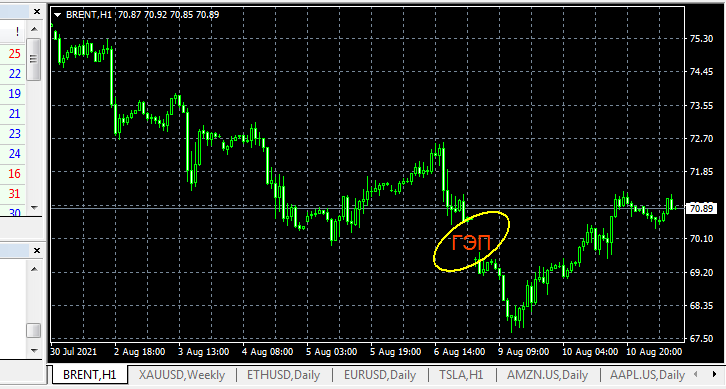
That is, if you have a buy order with a trailing stop, and the price falls after a gap, the order will close at a loss, although with a trailing stop, this is seemingly impossible.
Large price gaps most often occur after weekends or holidays, so you should think carefully before leaving trades for these times.
Expiration is the closing of futures contracts. If you trade futures contracts, some brokers may force you to close your positions at the current price.
This happens regardless of your take-profit or trailing stop level. This often comes as a surprise to traders trading oil or other futures assets.
Therefore, when opening such trades, you should always plan them taking into account the expiration date.
It can be said that when a trailing stop fails to work, there are almost always objective reasons that are easier to foresee than to correct the consequences later.