Forex books.
This section contains books and textbooks on forex and stock market trading. Each book is available for free download directly from the website server. All materials are distributed completely free of charge and are intended for personal use only.
These Forex books were obtained from open sources online. Thanks to them, you can master forex trading independently, without outside help.
Strategies of the world's best traders.
Every trader knows that Forex trading is simply unthinkable without a good strategy, but every beginner first tries to create their own unique trading strategy. 
But there's nothing more pointless than reinventing the wheel, and stock trading is no exception.
to create your own strategy, it's more effective to use proven strategies that have proven profitable in practice.
A book containing strategies from the world's best traders will help you with this.
Here's a summary:
1. Smoothing and Filtering Methods – this section discusses the moving average and its calculation methods.
2. Oscillators – what this group of technical analysis scripts represents, and a description of the most commonly used oscillator variants.
3. Volume – indicators that measure the volume of trades executed in the market and the principles of their practical application.
The Way of the Turtles. A story of dizzying success.
The story of an experiment that dispelled the myth that only people with specialized training can trade on the stock exchange.
The experiment itself arose from a dispute between two traders, one of whom claimed that virtually anyone could be taught to trade on the stock exchange, while the other held the opposite view.
As a result, an advertisement appeared in various print media advertising a group of students seeking trading training, with each of those selected receiving a $1 million prize.
It's worth remembering that this took place in 1983, when that amount of money was worth much more than it would have been today.
More than 1,000 people responded to the ads, of which forty were selected. You can read about the results in the book.
Secrets of Stock Trading (by V. Tvardovsky and S. Parshchikov)
There are numerous books written by leading theorists in the field of technical or fundamental analysis.
It's quite rare to find a truly worthwhile publication written by an author familiar with stock trading beyond textbooks.
Secrets of Stock Trading is certainly one such publication; its authors have been trading independently on the stock market for years and can share important trading nuances with their readers. This
textbook will be especially useful for those trading on the Russian stock market and are just beginning to learn about stock trading.
The authors were also novice traders at one time and faced the challenge of finding the necessary information, which is why they later decided to share their accumulated knowledge in their book.
The Dancing Investor: How I Made $2 Million in the Stock Market
Nicolas Darvas's book is a bestseller, familiar to virtually every trader considering working in the stock market.
The invaluable nature of this work lies in its simple stock trading strategy, which requires no knowledge of economics or fundamental analysis.
It presents in accessible language a method for selecting the most attractive stocks and the specifics of stock trading.
The author reveals his own success story, describes the difficult path that preceded it, and outlines the fundamental principles on which his trading is based.
Thanks to these principles, Nicolas Darvas himself was able to earn $2 million in a single trade in 1959, which, adjusted for inflation, is approximately $30 million today.
Summary:
Trading with Dr. Elder: The Encyclopedia of Stock Trading.
A textbook on stock trading, written by a trader with an interesting life story. Alexander Elder – a ship's doctor, psychiatrist, and ultimately one of the most famous traders.
It's hard to find anyone familiar with the stock market who doesn't know Elder's name; his works have served as textbooks for generations of aspiring investors.
The author's experience as a psychologist allowed him to thoroughly study crowd behavior in the market and develop several well-known trading strategies.
The book's main sections are:
1. Trading for Beginners – will help you determine your goals and objectives when starting out in stock trading (Trader, Investor, Player). Which market is most attractive? What you need for success – technical and organizational aspects.
Principles of Professional Speculation. Sperandeo V.
A textbook by a well-known analyst. Who among traders hasn't heard of the Sperandeo Method, which has been used in trading for hundreds of years and is based on hundreds of strategies.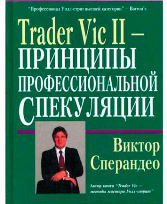
The author trades independently on the stock exchange, skillfully combining technical and fundamental market analysis options.
Sperandeo achieved unprecedented success in stock trading, with the average profitability of his trades reaching 70%, which is an excellent result for independent trading.
The most valuable quality of "Principles of Stock Speculation" is that the textbook was written relatively recently, in 2000, and it describes modern approaches to assessing the market situation.
Key points of the book:
1. Fundamental Factors of the Economy – this section is dedicated to the theoretical foundations of macroeconomics. This section will cover a variety of interesting topics, including the basis for market forecasting, the impact of policy on the country's economy, and financial management.
The Practice of Stock Speculation. Niederhoffer W., Kenner L.
The authors of the book are trader-manager Victor Niederhoffer, who is widely known in the world of finance, and Kenner Laurel, an outstanding analyst.
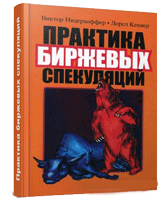
This symbiosis gives us hope that "The Practice of Stock Speculation" is not only a theoretical guide but also has practical value.
While numerous books claim that stock trading is simple, this textbook refutes this assertion and teaches how to organize the trading process.
It's essentially a set of tips and recommendations that help prevent most mistakes.
1. Mum-Jumbo and Moonlight – a general overview of the market and a description of the current situation at the time of writing. Statistics on stock price changes over the past decades.
Jesse Livermore: The Life and Death of the Greatest Stock Speculator - R. Smitten
A detailed account of the life and career of one of the greatest traders of our time Jesse Livermore, an ambiguous approach to stock trading, and a sad ending.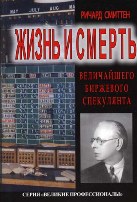
He was called a Wall Street legend, and the strategy developed by Jesse is still successfully used by some traders.
The book describes not only the technical aspects of stock trading, but also talks about the trader's personal life, in an easy-to-understand manner.
Brief summary of the book:
1. The Great Wall Street Speculator – the office of the stock exchange magnate, his working day and the essence of the organization of the trading process.
How I Play and Win on the Stock Exchange. Gary Smith.
Most books on stock trading are written by traders who have worked on real exchanges. This is, so to speak, office work, which is fundamentally different from independent trading on a home computer.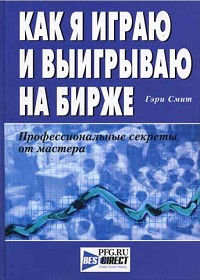
How I Play and Win on the Stock Exchange, a work written by Gary Smith, is radically different from other similar publications, because Gary was a home trader, not an office worker.
Therefore, this material will be much more understandable to a newbie on the exchange than other similar publications; there are no complex mathematical calculations and formulas, only practical advice and recommendations.
To understand whether this textbook is right for you, read its summary:
1. The first few chapters will describe what a typical day for a trader is like and dispel any hopes of easy money from stock trading.
2. The next section is devoted to working with futures, this is a rather interesting trader's tool, which we undeservedly pay little attention to.
"Everything is for Sale" by M. Ridpath.
There aren't many fiction books about trading, and those that are available for sale in most cases leave much to be desired.
"Everything is for Sale" by M. Ridpath is a professionally written book about stock trading that will give you an inside look at the stock market. Its artistic writing style makes it not only useful but also engaging.
The book is based on the story of a trader working in a small investment company that deals with investing in stocks and bonds.
The inside scoop on stock market trading is shown, so to speak. It's not always just about technical analysis; in most cases, trades are made based on insider information, rumors, and gossip.
Common Stocks and Unusual Profits. Philip A. Fisher.
If you are interested in the stock market, it is best to start learning it with theory, and the best book on the stock market is the work of Philip Fisher.
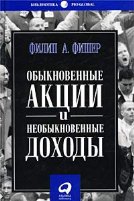
Common Stocks and Extraordinary Returns is a book that will not only teach you the theoretical foundations of stock trading but also reveal some practical secrets of this activity.
Its author is not just a theoretical analyst, but the former owner and manager of a large inversion fund with billions in turnover.
Philip Fisher was one of the first to use unconventional approaches to stock valuation; he determined the actual value of an asset rather than relying on a biased market indicator.
The book's main sections are:
1. Common Stocks and Extraordinary Returns – this section contains the basics that will help you choose the most suitable investment. The key points in this section include what to choose, when to buy, and when to sell.
Japanese Candlesticks: Graphical Analysis of Financial Markets. Steve Nison.
The author of the book is a professional analyst, and his analysis is based exclusively on Japanese candlesticks. His experience working for reputable companies only confirms his reputation as an analyst.
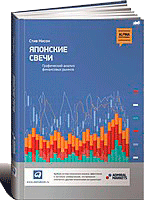
Most traders emphasize the effectiveness of Steve Nison, and it's no wonder his book has become so popular among those who use technical analysis in their trading.
To determine whether this textbook is right for you, it's a good idea to familiarize yourself with its main chapters.
1. Introduction – Why Japanese candlesticks attract the attention of most traders trading on the stock exchange. The history of the development of analysis based on them.
2. Basics – What candlesticks are, their definition, and structure. Bullish and Bearish candlesticks as an indicator of trend direction.
3. Patterns – Reversal and continuation patterns help determine the strength of the current trend and choose the direction of a trade, based on their location on the currency pair chart.
Fooled by Randomness (Nassim Nicholas Taleb)
Most stock market traders strive to create complex trading systems, although, according to the book's author, success in stock trading in most cases depends on chance.
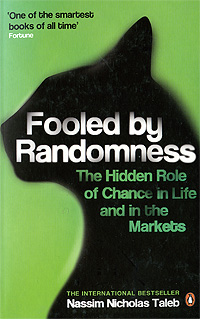
The author, Nassim Nicholas Taleb, is a renowned financier who not only built a successful career and amassed a fortune, but also became a writer who shares his knowledge with beginning traders.
The book's unusual perspective on stock trading is intriguing, and its main advantage is its accessibility for the general reader.
A brief description of the chapters makes it clear what this book is about.
Chapter 1 - Discussions on why the richest are not always the smartest, using the example of two traders with different income levels.
Chapter 2 - Constructing alternative scenarios and why a simple approach to solving a problem isn't always the right one.
Chapter 3 - Mathematical modeling applied to stock trading. Assessing the probability of a forecast in the long and short term.
John Murphy. The Virtual Investor: How to Spot Trends.
This book is the best purchase for a potential investor. It covers not only independent investing but also 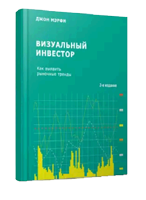 the functioning of investment funds.
The textbook is intended for traders working in stock markets, but with proper training, some of the technical aspects can be successfully applied to the Forex market.
In addition to the main section, the textbook contains additional information on working with Japanese candlesticks, measuring market width, and working with charting and computer programs.
The Virtual Investor is built on the following principle:
Mark Douglas "The Disciplined Trader".
Many beginners are seriously mistaken in thinking that the most important thing in Forex trading is finding a trading strategy. According to 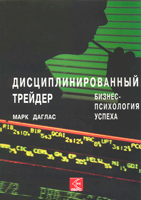 Mark Douglas, only 20% of success comes from the trading methodology, while the remaining 80% comes from following the plan and rules.
Discipline is the fundamental component of exchange trading; lack of discipline always leads to disastrous results. This is precisely why so many novice traders lose their deposits.
The book "The Disciplined Trader" reveals the psychological aspects of exchange trading; you won't find any descriptions of strategies and tactics here. Here's
a summary of the book.
Axioms of a Stock Speculator, Max Gunther.
An axiom is an indisputable rule that doesn't require proof. This book is structured around this principle, 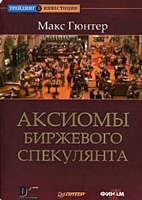 with the author attempting to explain the fundamental principles of trading in an accessible manner.
The book presents 12 basic axioms, which are described in the chapters of the same name. It's worth noting that these aren't just recommendations, but also a warning against using tactics and strategies that don't always work.
The following axioms will you learn about in this textbook:
1. On Risk - As the title suggests, the article is devoted to risk management in stock trading; this crucial issue is always prioritized.
2. On Greed - a warning to impatient traders who are eager to make a profit at any cost.