The new war and its impact on oil prices
Recent events in the Middle East have significantly boosted the oil market, with the price of oil futures continuing to rise steadily.
The situation surrounding Iran is escalating, and this is bound to impact the price of oil supplied to the market, as Iran is one of the largest suppliers of black gold.
The country holds the largest oil reserves and ranks first in production volumes.
Revenue from oil exports accounts for the lion's share of Iran's budget, so the government is interested in higher prices for this energy resource.
Back in late October, an International Monetary Fund official stated that to balance its 2020 budget, Iran would need to sell oil at $194 per barrel.
Thanks to the strikes on US targets in Iraq, the price of Brent crude has already reached $71 per barrel. What will happen if the situation escalates further?
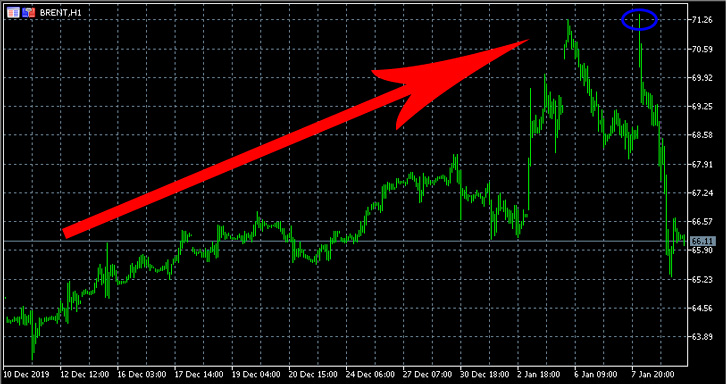 True, following US statements about huge gasoline reserves and the US military's refusal to engage in conflict, oil prices fell back to $65 per barrel.
However, such news is unlikely to have a lasting impact on the market; the price will likely resume rising after the first bad news from the Middle East.
Therefore, in the current situation, long trades remain viable, with the price of Brent crude expected to return to $70 per barrel.
Read also:
- Oil prices and exchange rates - http://time-forex.com/interes/neft-kurs-valut
- How to buy and sell oil - http://time-forex.com/vopros/prodavat-pokupat-neft