How the situation in Ukraine has affected global currency exchange rates
More than three weeks have passed since the outbreak of military action in Ukraine, and this event has had a dramatic impact on the situation on global markets.

After the panic on the main exchanges has subsided, it is possible to soberly assess the current exchange rates and, most importantly, the impact that the conflict is having on the economies of the countries involved.
In addition to the ruble and hryvnia, a week after the start of military operations, the Polish zloty also fell significantly, falling by about 15% to 4.60 zlotys per US dollar.
There has now been a pullback, and the price of the USD/PLN currency pair is currently 4.28 zlotys per dollar, which is still higher than on February 23, 2022.
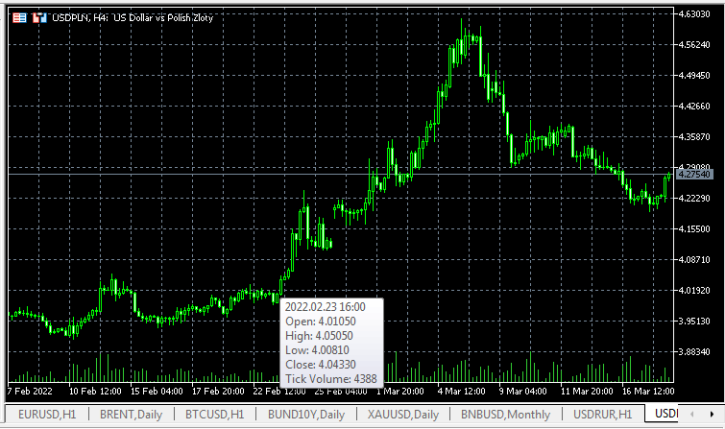
It can be assumed that after the rollback, the zloty will continue to fall, and the reason for this lies not only in the fact that Poland borders Ukraine, but also in the disappointing situation of its economy.
Since the beginning of the year, inflation in Poland has been breaking records, and a million Ukrainian refugees are only increasing the burden on the Polish budget. Many factories and plants have cut production due to shortages of components or labor shortages.
Therefore, we can predict a decline in the zloty exchange rate to 4.8 in the very near future.
The Swiss franc, unlike the Polish zloty, rose, reaching a peak value almost equal to the euro. This resulted in the EUR/CHF currency pair breaking its all-time low:
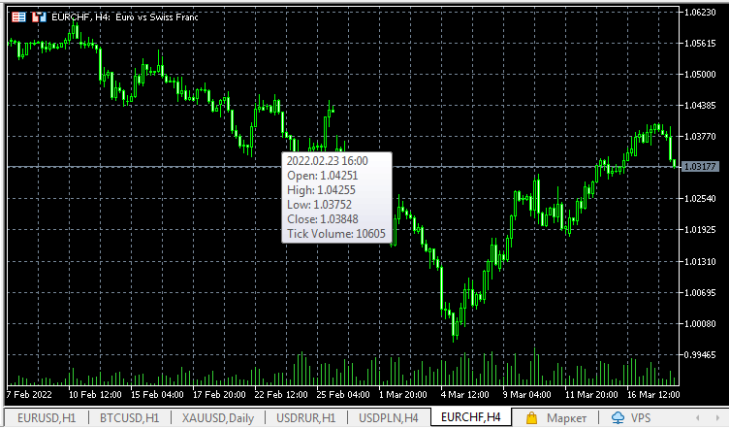
The reasons for the strengthening are quite obvious: the Swiss franc has always enjoyed enormous demand during times of global instability. This was the case this time, leading to its strengthening.
It should be noted, however, that further strengthening is not to be expected; investors have already transferred their savings to Swiss francs and demand for this currency has decreased.
The euro currency, despite unfavorable forecasts for the European economy, has hardly lost its position:
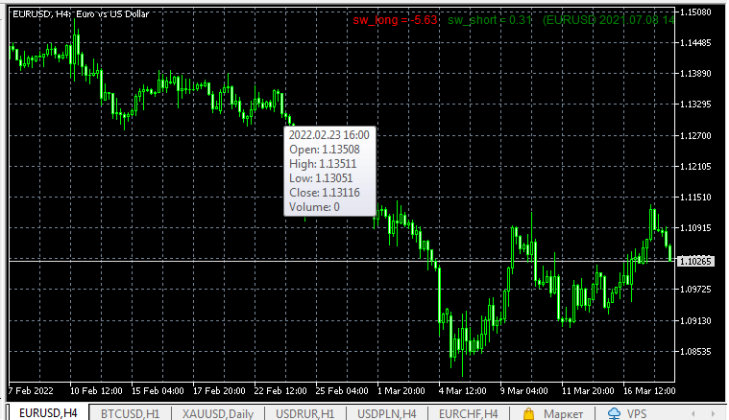
It's quite likely that the EURUSD currency pair will fall to $1 by summer. This is also due to the fact that the US economy has suffered the least from the severing of economic ties with Russia, which plays into the dollar's hands.
The situation with the Chinese yuan is not entirely clear-cut; the yuan exchange rate has currently fallen slightly and is 6.36 yuan per dollar:
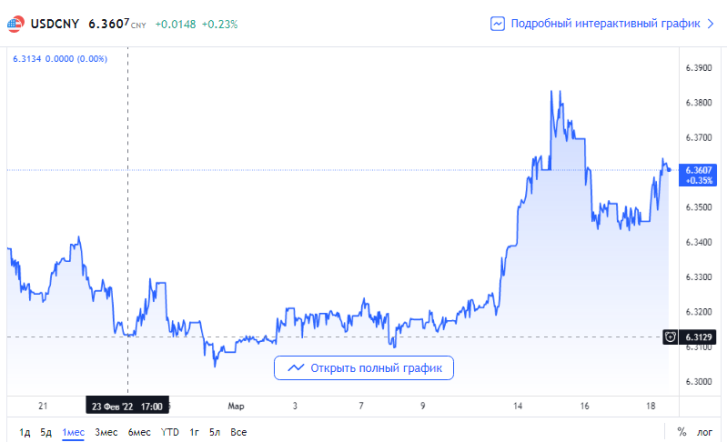
But this state of affairs won't last long; two scenarios exist. In the first scenario, the West will begin demanding a severance of relations with Russia and introduce nuclear power plants, which will lead to an even further weakening of the Chinese yuan.
The second option is more optimistic: if the parties to the conflict manage to reach an agreement, China will be able to gain significantly by supplying scarce goods to Russia and Europe.
As for the Russian ruble exchange rate, the current strengthening is a correction of the downward trend, and it is unlikely that the Russian ruble will remain stable at 100 rubles per US dollar for long.
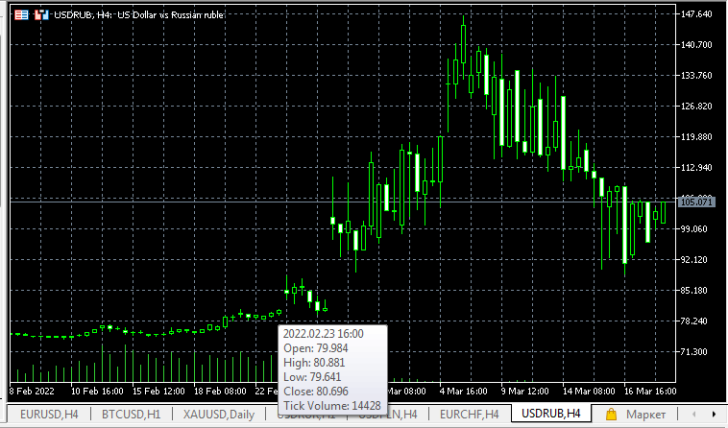
Stabilization of the exchange rate is expected only after the signing of a peace treaty between Russia and Ukraine. The exchange rates of other currencies could also change dramatically.