Income Management Applied to Stock Trading
Lack of money is one of the main problems that makes us unhappy, but often the reason lies not in the amount of money, but in the inability to manage it.

After all, paradoxically, people who earn less than $500 a month and those who earn more than $100,000 a month complain about not having enough money in the same way.
Therefore, it is very important to learn how to manage income, especially if it is unstable, as is the case with profits from stock trading.
After all, one month you can earn $1,000, and another $10,000, but in any case, you will have to cover current expenses and it is best to do this without resorting to loans.
We learn how to properly distribute the profits we receive
First, you need to calculate your fixed expenses for the month. Most people who are short of money don't know how much they spend.
This includes expenses for rent, internet and telephone bills, food and clothing – that is, everything that you cannot do without every month.
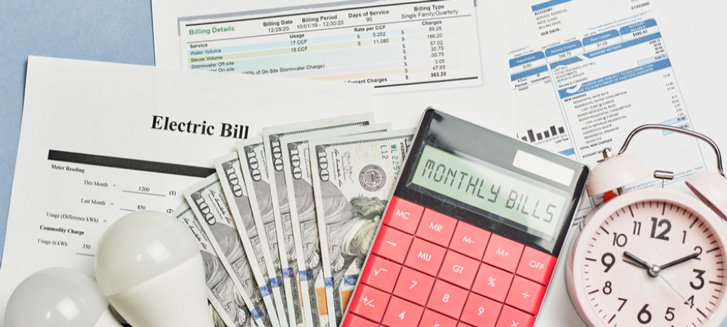
Often the reason for this ignorance lies in the fact that it is quite difficult to count all small expenses. Try giving up cash payments for one month; thanks to this, you will be able to see all expenses on your bank statement and determine where you are spending money.
For example, $2,000 is enough for me for all these expenses and I try not to go beyond this quota.
Afterwards, you can begin distributing the profits you've received, and it's best to do this once a month. I'll try to explain how this works in practice using my own example.
If I earn $5,000 per month, then in my case the distribution of money is as follows:
- Fixed costs - $2,000
- A reserve to cover potential losses is $1,000. This money is kept in a bank account and serves as a safety net, allowing you to cover mandatory payments if your monthly profit falls short of $2,000.
- Increase in investment capital - $1000.
- Large Purchases Fund – I use this account to save money for large purchases, such as replacing a car or going on vacation.
Thanks to this distribution, investment capital increases and a safety cushion is created in case of losses.

At the same time, during bad months you don't have to resort to loans, which then put pressure on you to make risky transactions.
The greater the profit received, the more money goes into the account and into the large purchases fund, which can also be used for long-term investments, such as purchasing investment real estate.
This is my approach to profit distribution, and it works perfectly for me, but you may need to find your own approach to capital management. The main thing is to keep track of your expenses and not let your expenses exceed your income.