Simple futures trading strategies and examples of their application
Futures are one of the most popular exchange trading instruments. Traders are particularly active in contracts for gold, oil, and natural gas.
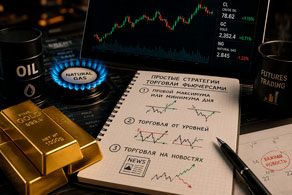
These assets are characterized by high liquidity and strong price movements. But to make a profit, it's not enough to simply buy futures when they rise in price or sell them after they begin to fall.
Without clear rules, traders often enter the market too late and close trades at a loss. Therefore, even trading popular futures requires a simple and straightforward strategy.
Breakout of the previous day's high or low
This is one of the simplest indicator-free strategies that is well suited for trading oil futures.
Before trading, mark the previous day's high and low prices on the chart. These values will act as support and resistance lines.
A buy trade is initiated if the price rises above yesterday's high and holds above it. A sell trade is initiated after the price breaks the previous day's low.
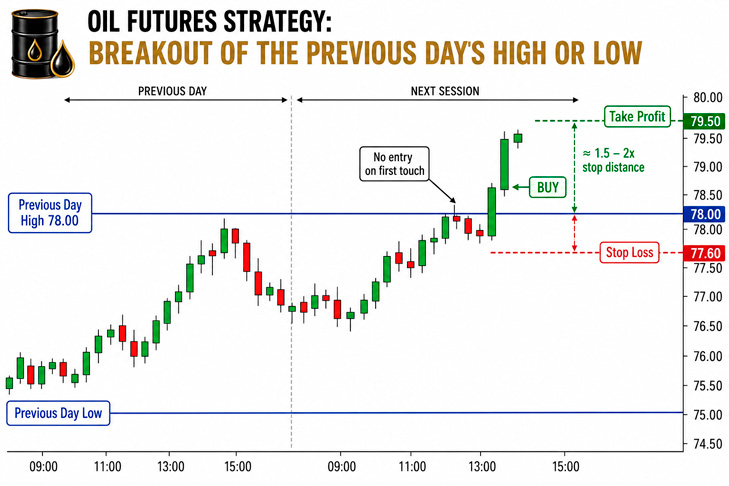
For example, if yesterday the maximum price of oil was $78, a buy entry can be considered after a confident consolidation above this level.
A stop-loss is placed beyond the broken level. The potential profit should be at least one and a half times the potential loss.
Don't enter the market after the first touch of the level. It's better to wait for the candle to close above the high or below the low to reduce the likelihood of a false breakout.
Factors Affecting the Price of Oil
Natural Gas Trading from Levels
The second indicator-free strategy is based on the use of support and resistance levels.
To begin, use the hourly or four-hour chart to find prices from which natural gas has reversed several times. The more such reversals there are, the stronger the level is considered.
A buy trade is opened near the support level after an upward candlestick appears. A sell trade is considered near the resistance level after a downward candlestick appears.
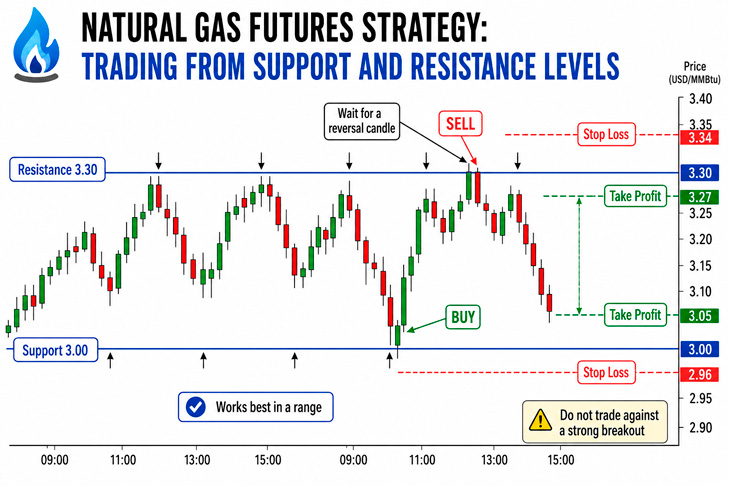
For example, if the price of gas dropped to $3.00 several times and then started to rise each time, this level could be used to find a buy.
A stop-loss order is placed slightly below support when buying or above resistance when selling. Profit is taken near the opposite boundary of the price range.
The strategy works best when natural gas is moving in a relatively stable range. After a strong breakout, it's best not to enter against the trend.
Futures trading on news
The third strategy is based on price reactions to important economic news. It's best suited for trading gold, oil, and natural gas. The schedule of important news can be found in the economic calendar.
Gold reacts actively to central bank decisions, inflation data, and employment data in the US. Oil changes direction after the release of inventory data and statements from major producing countries. Natural gas prices are influenced by inventory reports and weather forecasts.
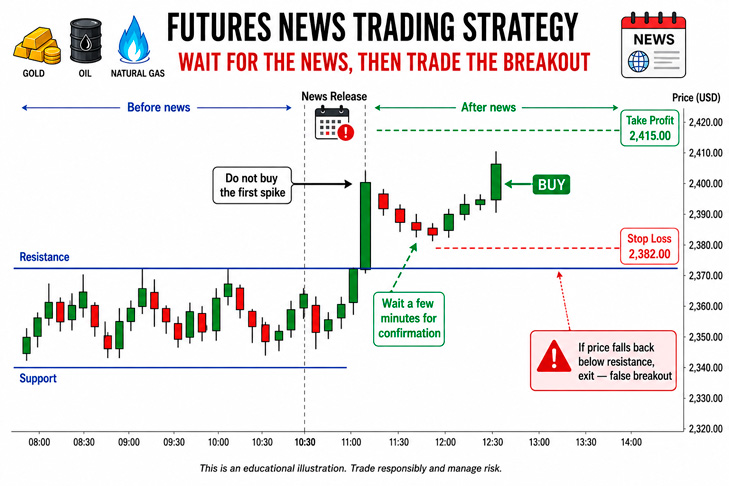
The main rule of the strategy is not to open a trade before news releases. Actual data can differ significantly from forecasts, and the market's initial reaction is often false.
After the price is published, wait a few minutes to determine the direction of movement. If the price breaks the nearest resistance level and holds above it, you can consider buying.
If after the news the price falls below the support and consolidates below the level, a sell trade is opened.
For example, after the release of oil inventory data, the price rises sharply, breaks the high of the last few hours, and remains above it. In such a situation, a buy trade is initiated after a slight correction, not on the first strong candlestick.
A stop-loss order is placed beyond the broken level. If the price quickly rebounds, it's best to close the trade, as the initial impulse was false. Best brokers for futures trading
Risk Management of Futures Trading Strategy
Even the simplest strategy doesn't guarantee a profit on every trade. Therefore, when trading futures, it's essential to use a stop-loss.
It's advisable to limit the risk per position to 1–2% of the trading deposit. Additionally, consider the contract size, leverage, and expiration date.
Before using a strategy on a real account, it's advisable to backtest it and test it on a demo account. Futures trading doesn't require complex indicators or a large number of rules.
Oil can be traded on a breakout of the previous day's high or low, natural gas - from support and resistance levels, and gold and other futures - after the release of important economic news.
The key is to determine the entry point, stop-loss size , and profit target in advance. Adherence to the rules, not the complexity of the strategy, often determines trading results.