Charles Dow – the man who changed the stock market forever
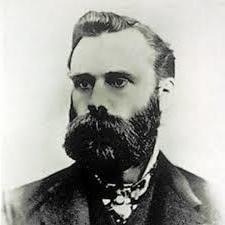
Charles Dow made a huge contribution to the development of the stock market and fundamentally changed the way traders and investors perceive stocks and other assets in the commodity and futures markets.
He also went down in history as the creator of the most important barometer of the US economy – the Dow Jones Industrial Average.
Dow was born on November 6, 1851, to a family of poor farmers. From childhood, Charles disliked his parents' primary source of income, and the prospect of continuing the family business greatly daunted him.
Therefore, at the age of 18, without any formal education, the young man left his home and farm and took a job as a journalist at a small provincial newspaper.
Pioneer. Career advancement
After a successful start at a local provincial newspaper, where Charles edited the economics column, he was offered a position as a financial reporter at The Providence Star.
His work there so captivated the newspaper's editors that he launched a new trend in financial journalism. Until recently, finance had been a highly secretive field, so no newspaper devoted attention to it. Charles
Dow's first articles focused on the mining and sale of precious metals. Like any beginner, his articles initially resembled short overviews of readily available information.
However, after some time and delving deeper into the process, his articles began to resemble analytical forecasts, where the author laid out key indicators, and his unbelievable predictions for the future began to come true.
Because Charles was a pioneer in the field of finance, his career as a journalist advanced at a remarkable pace. That's why he caught the attention of the well-established New York media outlet, the New York Mail and Express, where he began writing in great detail about the mining industry, analyzing key players and sharing his own insider information.
It was time to work for yourself.
Any journalist, by nature of their work, begins to develop personal contacts and sources of information, and in Charles's case, these were various stock exchange firms and major players.
Realizing that Dow and his partner Jones possessed colossal information, which they believed was worth money, they decided to launch their own newsletter, the "Customer's Afternoon Letter," in which the authors began publishing data on daily stock price movements.
This newsletter became so popular that the partners began making huge profits, and they were even able to generate additional interest among stock market participants for certain stocks.
Previously, traders and all stock market participants believed that asset prices were random, so no one ever tracked daily stock price movements.
With the advent of the newsletter, stock market players began to monitor specific market trends. Dow's chart, in particular, generated increased interest in fast-growing stocks, which greatly invigorated trading.
In 1889, Dow and his partner closed the newsletter and launched a new project, The Wall Street Journal, which became one of the most influential media outlets to this day. Dow and his partners were so successful that The Wall Street Journal remained unrivaled for nearly 50 years.
Recognizing that journalism was far from limitless, Charles Dow created the world's most famous index, the Dow Jones Industrial Average, which combines a number of the largest US companies.
Today, it's hard to imagine a major investor or trader who wouldn't consult this index before trading US stocks to gain insight into the real economic situation.
In 1902, at the age of 51, Charles Dow passed away and only some time later his theory and developments were published by the editor-in-chief of The Wall Street Journal.