Peter Lynch
Peter Lynch is the manager of one of the largest hedge funds, whose unique approach has enabled him to maintain the fund's profitability for 13 years, and the growth of his assets through stock purchases has made his fund the largest in the world.
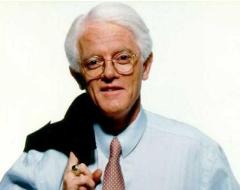
Peter Lynch is a star in the investing world, and his books (Beat Wall Street) lay bare all the essentials of stock picking and smart investing.
It's also worth noting that Peter Lynch is a clean investor, not involved in any major regulatory scandals, so his success story is beyond doubt.
However, before reaching such extraordinary heights, he had to endure a rather difficult life experience, which will be discussed in this article.
Seeing the complexity of life while still a schoolboy, Peter gets a job at a local golf club as a ball and club carrier.
At that time, golf clubs were, and still are, a gathering place for the American elite, stock traders and owners of the largest hedge fundsTherefore, from a very young age, the world of stocks and the stock market was a priority for Lynch. By the age of ten, Peter had already defined a goal he was determined to achieve, no matter what.
First experience on the stock exchange
After graduating from high school, young Lynch knew he wanted to study finance. However, the savings he'd earned carrying golf clubs weren't enough to pay for his education, so Peter first decided to apply the knowledge he'd gained from eavesdropping on stock market players.
Peter believed that air cargo transportation had a huge future, so he decided to buy shares of Flying Tigers Airlines for the first time, which was not only promising but also inexpensive, namely $7 per share.
When the US-Vietnam War broke out, virtually all stock prices plummeted. However, it was precisely because the US had to airlift supplies during the war that the company's stock rose to $30. This gradual rise in stock prices over several years enabled Peter to pay for his education at the University of Pennsylvania.
Career growth.
After completing his studies, Peter decided to join Fidelity as a regular intern. Incidentally, there were 75 applicants for the analyst position, but Peter reminded the fund's CEO that he'd been his golf club handler for seven years and knew as much about the world of stocks as the company's CEO did.
It was Peter's courage that won over the company's head, so Lynch quickly assumed his duties.
Peter had a truly formidable grasp of the game, so after three years of work in 1974 he was promoted to director of the research department at Fidelity, and a couple of years later Lynch became the head of the Magellan fund, which specialized in stocks.
Upon assuming control of the fund, the firm's CEO issued strict instructions to reduce the stock portfolio from 40 different companies to 25, a task he has yet to achieve. Lynch loved stocks so much that he saw profits everywhere and actively, against the wishes of his superiors, acquired various assets.
Incidentally, the number of different companies was so high that Lynch's colleagues began to tease him for being a constant source of support and buying up everything. However, whatever anyone said, Lynch actively increased the fund's returns, so from a starting capital of $18 million, the fund grew to $14 billion in investor funds.
Peculiarities of choosing an investment object.
Peter always relied on logic, not mere numbers, when choosing stocks. As his office staff recalls, Lynch once brought twenty pairs of tights from different manufacturers and made his female staff wear them for two weeks.
At the end of his term, Peter collected all the employee reviews and, based on them, purchased shares in the best company, and believe me, he was right. Peter always tried to choose companies with a narrow focus and that weren't being considered by other major investors.
At the age of 45, Peter Lynch retired from business, becoming one of the CEOs of Fidelity and devoting himself to philanthropy.