Wolfe Wave Indicator
Wave theory is considered one of the most complex techniques in graphical analysis. However, the popularity  of Elliott's works has given rise to new concepts and approaches to wave analysis, one of which is Wolfe's wave theory.
When analyzing waves, Wolfe applied the famous rule of physics, “For every action there is an equal and opposite reaction,” believing that the price swings back and forth like a pendulum.
By applying this rule, he formed his own concept of wave formation and offered the whole world his pattern, which consisted of five knees and showed a clear place of reversal and targets.
In fact, while graphical analysis and the main patterns of trend continuation and reversal are very subjective, the Wolfe pattern has clear rules for constructing and working with it.
Building a pattern yourself
In order to use additional tools to detect Wolfe waves, it is necessary, first of all, to learn how to find them independently, which will allow you to discard incorrect constructions made by technical indicators.
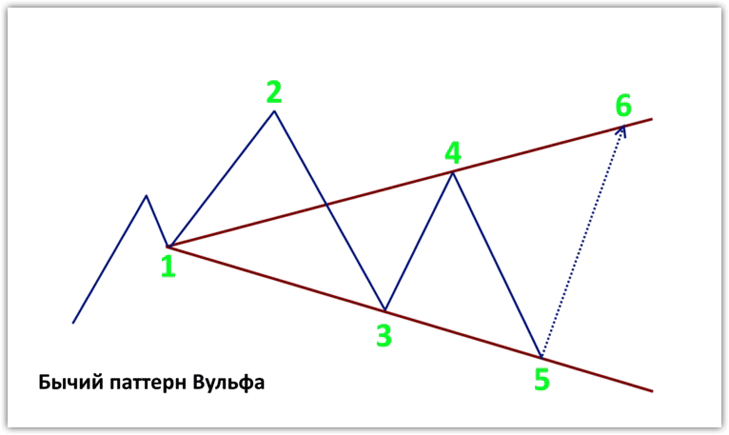
Bullish Wolfe Pattern
The bullish pattern is constructed using five points, with the sixth being the immediate target and the fifth the entry point. You should clearly understand that the pattern is a reversal, so the first point is below the second, the third below the first, the fourth below the second but above the third, and the fifth below the third.
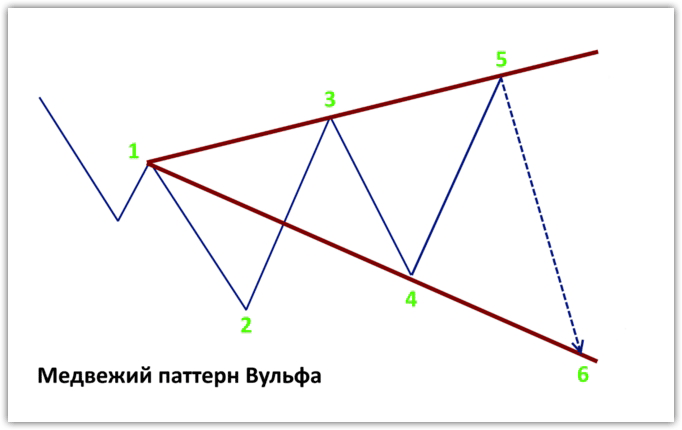
Bearish Wolfe pattern
This pattern is constructed in a completely opposite way, namely, point 2 is below point 1, point 3 is above the first point, the fourth point in turn is above point 2, but below point 3, and point 5 is above point 3.
The line that connects point 1 and 4 is our target, since point 6 will be located on it. See the example below:
Wolfe Wave Indicator
As you've already realized, even schematically, Wolfe Waves appear quite complex, and on a chart, finding these patterns is quite challenging for a beginner. This is why Wolfe indicators, which perform the markings automatically without any intervention from the trader, are so popular.
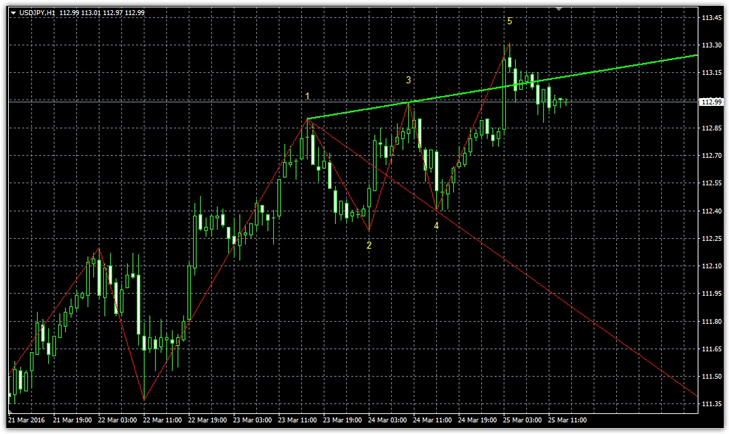
The Wolfe 40 Wolfwave indicator uses the ZigZag indicator to identify extreme points, which are used to construct the waves themselves. The Wolfe indicator can be used on any currency pair and chart, as this price behavior pattern is common to all assets on any time frame.
Installation
This tool was developed for trading on the MT4 trading platform, so to use it, you must first install it. To do this, place the Wolf indicator downloaded at the end of this article in a folder called "indicators," which you can access through the data directory in the File menu. After installation, refresh the "Navigator" panel, and the indicator will appear in the list of tools.
Wolfe Indicator Settings
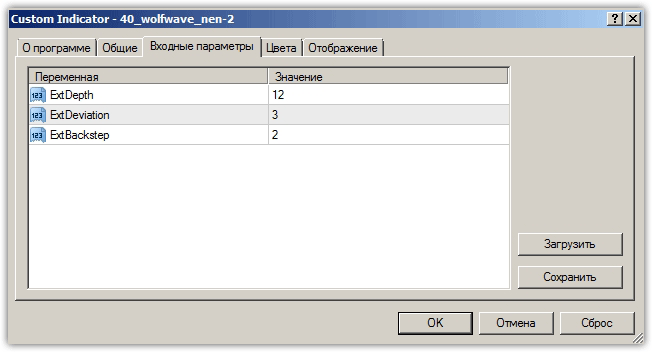
: The Wolfe indicator settings contain only three parameters, which are completely identical to those of the ZigZag indicator. The ExtBackstep line specifies the ZigZag indicator value. The ExtDepth line specifies the ZigZag indicator depth, and the ExtDeviation line specifies the ZigZag indicator deviation. These are essentially all the settings that affect wave detection.
Signals
The Wolfe indicator automatically marks and numbers waves on the chart, and in addition to defining them, it draws a signal line between points 1-3-5, as well as a target line between points 1 and 4.
Buy signal:
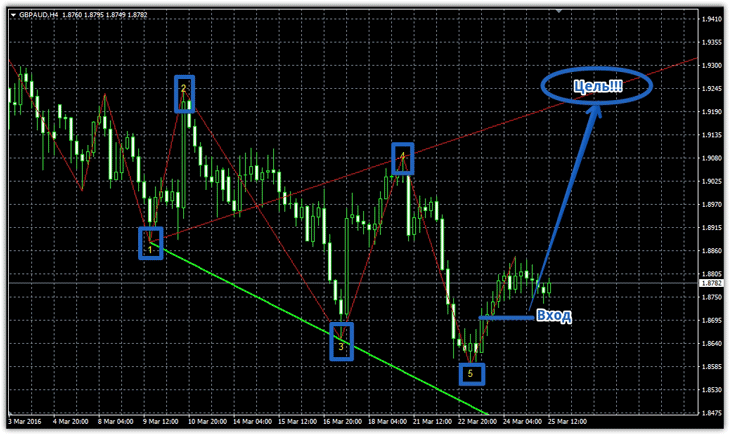
1) The indicator detects a bullish Wolfe pattern.
2) We wait for the price to bounce upward from point five and enter the position.
The entry occurs on a closed bar, with our profit target being on the line drawn between points 1 and 4. Example below:
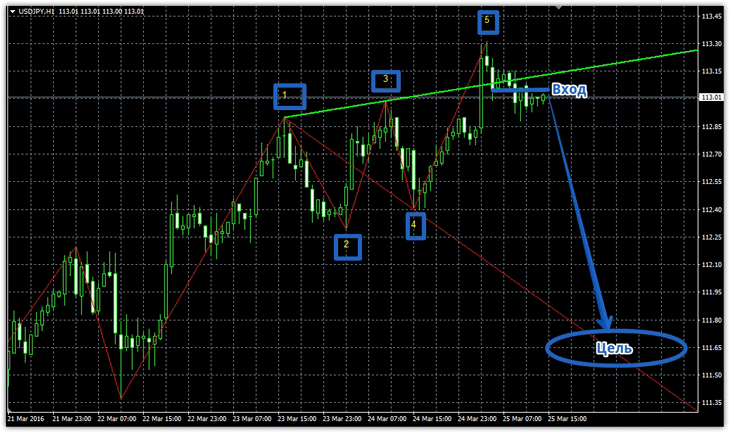
Sell signal:
1) The indicator detects a bearish Wolfe pattern.
2) We wait for the price to bounce down from point five and enter a position.
The position is entered on a closed bar, with our profit target being on the line drawn between points 1 and 4. See the example below:
In conclusion, I'd like to point out that no Wolfe indicator can perfectly depict a pattern as described in the textbook. However, you should clearly understand that dry theory is far removed from practice, and the pattern itself appears more distorted in the real market.
Download the Wolfe Wave indicator.