The relationship between leverage and stop-loss levels
A stop loss is an integral part of any trade; setting this stop order allows you to protect your position from large losses.

When calculating the size of a stop loss, two parameters are usually used: the first is the acceptable amount of loss from one transaction, and the second is the location where the stop order is placed.
Most financial experts recommend limiting losses per trade to 2-3%, with the exception of positions opened as part of high-risk strategies such as scalping.
The second indicator is the stop-loss placement itself, which is usually a likely price reversal point. For example, in buy trades, this is a support line, after which the price will begin to fall, or levels near which a reversal may occur.
For more information on choosing a stop-loss location, see https://time-forex.com/sovet/razmer-stop
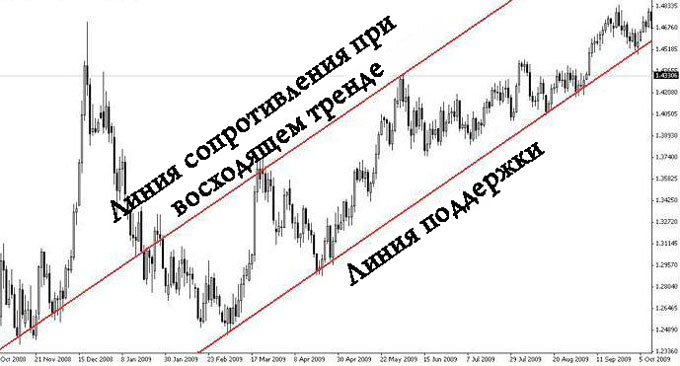
That is, the optimal solution would be for your stop order to be placed in the correct place, while the amount of losses in the event of a trigger should not exceed 2-3%.
The Role of Leverage in Stop Loss Setting
When opening a new account, you also choose the leverage level for that account. Traders typically choose the maximum allowed leverage level of 1:500 or 1:1000. The leverage level is then adjusted based on the trade volume, meaning even with 1:1000 leverage, you can open a 1:1 trade using only the funds in your account.
This approach should also be used when calculating acceptable losses when setting stop losses.
If the place where you plan to place a stop order assumes a loss of 0.2% of the trade, and you open a trade with leverage of 1:100, then 0.2% of the trade will turn into 20% of your deposit.
For example: You have $1,000 in your account, you opened an order with 1:100 leverage for $100,000, and set a stop loss of 0.2% of the order size or $200.
This means that if triggered, you will lose $200 with a deposit of $1,000, which is unacceptable according to risk management.

To reduce the size of potential losses, it is recommended to reduce the transaction volume to 10,000, in which case the losses will amount to 2% of the deposit of 1,000 dollars.
Change the stop loss location
Another solution to this problem could be to switch to a shorter time frame; in this case, the location of the stop order will also change, since on a lower time frame, the significant levels will also change.

This means that the stop order will be triggered closer to the opening price, and the losses when triggered will be smaller.
If you're concerned about the sheer number of calculations involved in setting stop orders, you can use scripts to automate the process.