Tactics for Waiting Out Losses: Death for Beginners and Salvation for Professionals
It's no secret that more than 50 percent of your future success depends on your choice of trading tactics, but the remaining 30-40 percent can affect the effectiveness of your strategy.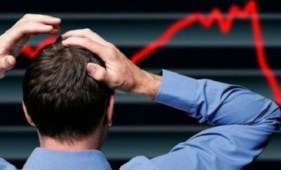
They directly depend on the chosen capital management model, and to a large extent on how you will manage the transaction and limit risks.
Today, there are more than a dozen capital management models and approaches to transaction support, but they can be roughly divided into two groups: loss-cutting tactics and loss-waiting tactics.
The loss-waiting tactic is an approach to risk management, in which the trader either does not use a stop order, or there is a very small profit and a very large stop order.
Reasons for using the loss-waiting tactic. Application options
Waiting out losses is mainly caused by a trader's purely psychological state, namely, denying that he is wrong and trying to fight the market, to play against it.
Not only beginners, but also more experienced players resort to the tactic of waiting out losses in the hope of a market reversal.
Despite the fact that the tactic of waiting out losses is considered negative and undesirable to use, it has a completely logical justification.

It is no secret that the market always remains within a certain range, which is formed for economic and political reasons by the countries that make up the currency pair.
Naturally, the market does not stand still, and traders force the price to move within a certain range, and the price can repeatedly come and bounce off the boundaries of the range and repeatedly return to the starting point.
Because stop orders Quite often, traders are knocked out during high volatility; they take advantage of the market's cyclical nature and do not set a stop order, hoping that the price will return.
Now let's take a look at the different types of loss-bearing strategies, as well as the situations in which they are appropriate:
1) Tactics of waiting out losses with a large stop order and small profit
Despite the fact that the tactic of waiting out losses often leads to very disastrous consequences, most traders who use scalping strategies and scalping is used without even realizing it.
So, if we're talking about scalping, then taking into account the spread when entering a position, the market is no longer on your side, and the slightest activity can easily knock out a trader with a small stop.
Therefore, the pipsing and scalping trader has to significantly widen their stops and reduce potential profits, since the probability that the price will move 5 pips in your favor, rather than 10 against you, will always be on your side.
2) Tactics of waiting out losses by averaging
Regardless of how beginners and professionals feel about martingale, this type of money management can be safely classified as a tactic for waiting out losses.
The point is that when using Martingale, a trader doesn't use a stop order at all, but by opening a series of orders with an increased lot, he relies on the market's cyclicality, hoping to get another pullback and earn at least something.
Unfortunately, a protracted trend using this tactic of waiting out losses is simply destructive to the trader's deposit.
3) Tactics of waiting out losses by locking orders
Despite the fact that a lock allows you to lock in a loss in a fixed position, a trader most often does not lock in a loss, but tries to find a point for a positive exit from the situation.
As a result, the first profitable lock order is closed with a profit, and the second one is relied upon to hope that the market will roll back and the loss will be reduced.
4) Complete absence of stop orders
Unfortunately, many traders are terrified of stop orders and rely on market cycles, hoping to ride out losses and make a profit after a while.
As a rule, getting caught in one prolonged trend causes a trader to suffer huge losses.
The advisability of using the loss-waiting tactic
The forex market is not a place where you can wait out losses because of the high volatility Coupled with the broker's leverage, they can quickly wipe out any trader's balance.

This tactic can work when trading real stocks for dividends, as well as during a cutoff, when it is simply necessary to wait out the resulting price gap in order to exit with a profit.
In conclusion, it is worth noting that the tactic of waiting out losses for day traders is comparable to suicide,
However, for a large investor trading in the stock and government bond markets, such tactics are the norm and an integral part of the trading process.