Marubozu candles.
Japanese Marubozu candlesticks are quite easy to spot on a currency pair chart, which is one of the reasons for their popularity, as traders can immediately 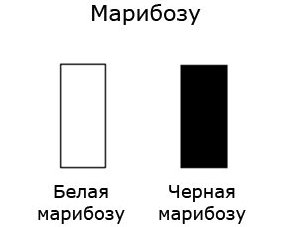 identify such a candlestick and combinations involving it.
Marubozu is a long candlestick with no shadows, meaning its body overlaps the low (high) on a given time frame. There are several variations of Marubozu.
Bearish and bullish Marubozu are variations in which there is no shadow at either the open or close. A black candlestick indicates a downtrend, while a white one indicates an uptrend.
If the candle corresponds to the existing trend, then it is more likely to be a continuation of the trend than the beginning of a reversal.
Opening Marubozu - in this case, during an uptrend, the minimum is the opening price itself, and during a downtrend, the maximum is also the opening price. This candlestick indicates that the correction was smaller than the opening price during its formation.
Unlike a maribuzu closing, this is a weaker candlestick.
A maribuzu closing means that the candlestick's shadow is no longer present on the closing side; that is, at the close, the price broke the previously formed high (or low), and the body covered the candlestick's shadow. A strong candlestick, when its direction coincides with the existing trend, only emphasizes its strength. The longer the resulting candlestick, the greater its influence on the trend.