The best Forex terminal: choosing the right trading software
The trading terminal is a trader's work environment, the tool through which the entire trading and market analysis process occurs. As strange as it may sound, your future success directly depends on the choice of a particular platform, and if you're new to the market, the speed of your learning curve is directly affected by the platform.
A trading platform allows you to realize all your potential, and in some cases, significantly limit it.
While until recently the number of different trading programs could easily be counted on one hand, today, in pursuit of improved customer service, various brokers are constantly creating new applications, each with its own unique features.
Each platform has its own unique appeal, so depending on your goals, it's advisable to choose the best Forex terminal that meets your requirements.
The most popular trading platform today is considered the Meta Trader 4 trading terminal. This platform has a simple and unobtrusive design, extensive functionality, and vast trading capabilities.
Non-standard timeframe in MT4
Every trader at the beginning of their development is faced with the problem of choosing a specific asset and time frame.

While choosing an asset is fairly straightforward—you only need to trade an instrument whose movement structure you understand and can explain—the choice of timeframe largely depends on the trader's preferences.
I'm sure everyone has encountered this situation: we don't have much time for trading, so we work on higher timeframes. When we have free time, we all switch to five-minute timeframes and try to extract as much profit as possible from the market.
Unfortunately, this kind of back-and-forth creates enormous chaos in our trading, and our results are typically significantly lower in this chaos.
How to connect multiple monitors for trading
You've probably seen professionals working on two or more monitors while reviewing analytics or the news.  Scientific research has shown that working on two or more monitors increases efficiency and productivity by an average of 33 percent.
This is especially true for creative individuals and those in engineering professions. Just imagine: something as simple as an additional monitor can dramatically increase your productivity.
When it comes to trading, having two or more monitors allows you to monitor the market situation more closely.
Just remember yourself switching from one currency pair to another every five to ten minutes, losing concentration and composure in search of a market signal.
How to write an Expert Advisor for MetaTrader 4
The dynamic development of the market and constant advances in computer technology force traders to keep up  with the times. While writing expert advisors to suit their trading strategy was once seen as a whim to simplify a trader's life, it's now more of a necessary measure to remain competitive in this market.
Yes, competitive, because robots have completely taken over the exchange. While pipsing and scalping strategies were once easy to apply manually, now it's quite difficult to remain effective against the backdrop of high-speed robots.
Therefore, sooner or later, each of us asks ourselves a completely logical question: “How to write an advisor for MetaTrader 4?”.
To write an advisor for MetaTrader 4 or any other platform, you must first have programming knowledge. Our experience shows that each platform has its own programming language, which can be easily learned using the program's textbook.
Negligent brokers and advisor protection.
The brokerage industry has expanded significantly recently, and we see  the emergence of new and diverse brokers every day. Dealing centers and their subsidiaries have also begun to develop rapidly.
The emergence of such competition in this industry has given traders maximum deposit bonuses, promotions, and all sorts of perks that are hard to imagine trading without. Take for example the 1:1000 leverage offered, when just a couple of years ago, 1:500 was hard to come by.
The number of bonuses and advantages offered by some brokers over others can be overwhelming. However, amid all the benefits that have come with the development of this industry, it's worth noting that the number of dishonest brokers has also increased exponentially.
Which account to choose on Forex.
Beginning forex trading typically begins with choosing a broker. Beginning traders devote a great deal of time and  effort to this matter, but choosing an account type is no less important.
In practice, there are approximately ten different types of trader accounts, each designed to address specific needs. The choice is made immediately, but there may be several available, so it's safe to make a mistake at first.
The account type determines the spread size and the minimum deposit required to begin trading.
Free Forex signals
Not everyone understands the principles that underlie Forex market movements, but this is no reason to despair. 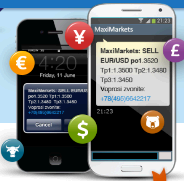 Free signals for opening positions will come to your aid.
Forex signals are messages containing recommendations that specify the trade time, currency pair, direction, and other parameters, such as the expiration time and stop order size.
There are several ways to obtain such recommendations, either completely free or relatively free (requiring a deposit to your broker account), and we'll discuss them below.
Forex trading without indicators.
It turns out that Forex trading can be done without using technical analysis indicators, which are often disliked by novice traders.
The main reason for this dislike is that most indicators provide their signals with a slight delay, which causes problems when trading on short timeframes.
Furthermore, most scripts require additional configuration and optimization, which is not always feasible for Forex novices. Fortunately, however, there are plenty of options for trading without indicators.
1. Based on candlestick analysis – Japanese candlesticks signal a continuation of a trend or an impending reversal. There are about a hundred candlestick combinations that can be used to determine market sentiment.
Promotions offered by brokers.
In today's market environment, there are numerous ways to increase your profits. You just  need to monitor your broker's promotions, and sometimes, when particularly lucrative offers arise, you can even switch brokers.
Some traders are reluctant to engage with bonus programs, but promotions aren't always bonuses; there are other, safer and more profitable offers.
Let's take a look at what forex brokerages are offering today to attract clients:
Where to get money on Forex.
Most newbies dreaming of becoming a trader believe that the key to stock trading is finding  a certain amount of money, and the more it is, the faster the path to wealth.
This statement isn't far from the truth, which is why starting capital in Forex is one of the keys to successful trading. The larger the amount, the less risky the trading option you can use to generate profit.
Therefore, the question immediately arises: where to get money for Forex trading? And most importantly, how much is needed to make a significant profit.
The Smallest Spreads, Brokers, and Currency Pairs
The spread plays a huge role when trading with high leverage; many scalpers end up paying  several times their deposit.
The spread is influenced by three factors: the trading instrument (currency pair), the broker you're trading with, the account type, and the trading time.
Any of these factors can increase a small spread to a huge amount, negatively impacting the financial results of your trade.
Let's take a look at it one by one:
Who should not trade forex.
There's a category of people who shouldn't even begin trading on the forex market. The outcome of their attempts is quite predictable: loss  of money and further disappointment.
Typically, these aspiring traders share a number of common traits that will hinder their success.
So, what traits can hinder their ability to become a trader and lead to loss of money?
• Greed - consider how often you borrow money or treat someone at your own expense, how much you love money, and how difficult it is for you to part with your own money.
If you admit to being greedy, you're better off avoiding trading on the exchange, as this very trait will force you to take excessive risks, which always leads to losses.
Forex account replenishment.
Funding a Forex trading account may seem like a simple process, but it can sometimes raise a lot of questions for novice traders.  However, if you don't take certain nuances into account, you can actually run into difficulties.
Visit any broker's website and compare the number of payment systems available for depositing funds to the number available for withdrawing funds.
The latter are usually at least half as numerous, and the explanation for this situation is quite simple – purely technical.
Interest on forex deposits.
Most Forex traders don't pay attention to such a trivial detail as deposit interest, or more precisely, interest on  available funds not used in foreign exchange market transactions.
Almost all brokers offer their clients such a bonus, and the accrual amount is significantly higher than that offered by banks. Typically, the interest rate ranges from 10 to 15% per annum, depending on the broker.
While this may seem like a small profit for scalpers, there are plenty of other strategies that earn just a few percent per month, and additional accruals can significantly increase your earnings.
However, there is one caveat: as a rule, you can't simply deposit funds into a trader's account and receive interest; you must actually trade. This means you must open at least a couple of orders per month.
Pros and cons of a demo account
Free Forex demo accounts are a tool that some love and others hate. Why  is this? What are the potential harms of a practice account?
While a demo account certainly has its advantages, there are also pitfalls that can negatively impact future trading. Let's look at demo accounts from different perspectives.
A demo account allows you to practice trading forex for free.
For beginners, it's a godsend. Even experienced investors use it to test their new methods and systems.
Signals for trend reversal.
Most traders suffer losses and lose profits due to trend reversals, so one of the main tasks in  Forex is to detect these reversals in a timely manner.
There's no need to explain the consequences of a trend reversal; at a minimum, it can trigger a stop-loss or trailing stop, and at worst, wipe out your deposit.
There are several ways to receive trend reversal signals:
Risks of choosing a broker
There are countless recommendations online on how to choose the right Forex broker, but they mostly boil down to reviewing  trading conditions and the quality of dealing services.
In fact, there's a very real way to distinguish a broker from a so-called shell company that works against its clients.
It's quite simple; checking only takes a couple of minutes, but afterward, you'll know exactly who you're dealing with and how high the risk of losing your deposit is based on the brokerage company.
Leverage risk.
Recently, brokers have been increasing their maximum leverage, with some companies already reaching  1:2000.
This would seem to be a boon for traders: deposit $100 and trade $200,000, only to be able to cash in on their profits. But in practice, the situation isn't quite as expected.
Trends rarely move in one direction for more than 15-20 pips, and even on short timeframes, there are constant countervailing swings. What are the benefits to a trader using high leverage?
Dealing center for beginners.
Choosing your first DC is quite important when starting out in Forex trading. What key features and characteristics  should a brokerage company have to meet all the requirements of a novice trader?
It turns out there are quite a few such requirements, some of which are quite specific and less relevant for experienced professionals.
Below, I'll not only list the necessary characteristics but also provide examples of some suitable DCs.
No losses on Forex.
The Forex market is perceived as one of the riskiest trading platforms, a reputation it has earned due to the large 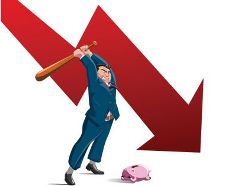 number of traders who suffer losses.
Trading completely without losses is simply impossible, but it's important to avoid losses exceeding profits; such trading always results in a complete loss of the deposit.
You should try to minimize potential losses and reduce the likelihood of losing your deposit to a minimum; this isn't as difficult as it seems.
How to overcome emotions in Forex.
The biggest causes of trading failure are emotions, which trigger rash decisions.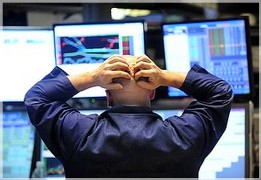
While it may seem impossible to completely eliminate emotions from trading, this is not the case. If you want, you can significantly reduce the influence of emotions on your decisions.
There are several ways to do this: pending orders, stop orders, automated trading methods, or binary options trading.
How to make money on Forex with a small deposit.
Trading on any exchange requires a significant amount of capital, but you can try to make money even without  a substantial sum. Of course, we're not talking about a couple of dollars here; we're talking about a deposit of several hundred.
Beginners often ask: How can I make money on Forex with a small deposit?
To be completely honest, the answer is: making money, no, but winning, yes. In other words, everything will depend on a multitude of factors that are quite difficult to calculate and take into account.
To make money with a small deposit, you will need to use substantial leverage, typically 1:100 or more.
You will also not be able to use most popular trading strategies, since the open position will have weak support.
How not to lose money on Forex.
Losing histories on the Forex market are generally as similar as two peas in a pod, so there are numerous 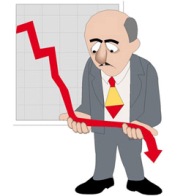 standard recommendations for reducing the likelihood of critical losses.
By following a few simple rules, you'll be virtually 100% protected against losing your deposit and major drawdowns.
Essentially, this is a comprehensive set of measures, including trading recommendations, capital management, and risk hedging.
Losing money on Forex is usually caused by technical problems with trading equipment, improper capital allocation, lack of stop-loss orders, and attempts to make large profits all at once. Therefore, the main components of a loss-prevention system are:
Forex by days of the week.
When trading on the forex market, you need to know not only how to trade but also when, as trading 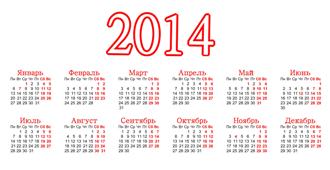 varies significantly depending on the day of the week.
An incorrectly chosen market entry time can result in a wasted deposit, and even a stop-loss order won't prevent this.
Forex trading by day of the week allows you to make the right decisions regarding the duration of a transaction and other parameters, as well as when to trade and when it is better to refrain from opening new positions.
Auxiliary forex tools.
Trading on any exchange is quite a complex undertaking, so why not make it a little 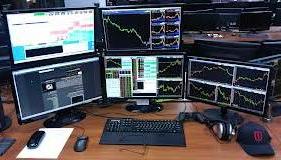 easier? Various Forex instruments are used for this purpose.
Forex tools include specialized programs, scripts, informants, methods, and other ways to obtain additional information that will increase your chances of success.
Technical analysis indicators – it's rare to find a trader who doesn't use this tool; they allow for more effective analysis of the Forex market. There are several groups of indicators: some study trends, others plot lines and levels, and still others evaluate market conditions.
Ruble trading on Forex.
Recently, 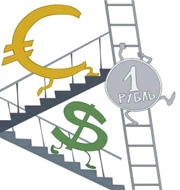 the Russian ruble has become increasingly popular as a currency in foreign exchange trading.
The ruble is used in forex trading alongside the US dollar or euro; these two currency pairs offer significant profits, despite the rather large spread.
The main advantages of trading the ruble include the availability of fundamental data (economic and financial news, analyst reviews), high volatility, and the ease of forecasting the exchange rate.
How to choose the best Forex dealing center (DC).
Making money on Forex isn't easy, so choosing a dealing center is even more important.  I've worked with quite a few dealing centers, and it's incredibly frustrating when a broker, for whatever reason, tries to cut profits or refuses to hand them over altogether.
In this article, I'll explain how to avoid such unfortunate misunderstandings and preserve your profits, along with the hassle of dealing with disputes. Trading conditions and other advantages are far from the most important considerations.
Let's return to the question of how to choose a dealing center for Forex trading.
The main selection criteria are:
Currency trading rules for beginners.
Statistics show that no more than 15% of all participants in  this free financial market achieve a stable profit in retail Forex. Yet, some currency traders earn over a million dollars a year.
This begs the question: "What is it that these 'few' lucky ones' know and do that's so special?" Nothing special. They simply strictly adhere to a set of internal trading rules.
And they adhere to them not just occasionally, but constantly, meaning every minute they spend in front of their trading system. Below are some of the rules from this set. They are useful for novice traders to follow, allowing them to develop their own trading principles over time.
How a beginner can make money on Forex.
I'd like to disappoint novice traders right away: it's practically impossible for a beginner to make money on Forex.  More precisely, "making a consistent profit." Making a profit on one or two trades is entirely possible, but making such success a regular occurrence is quite difficult.
Typically, it follows a standard pattern: you earn a few pips on winning trades and lose everything on one losing one.
There's no standard recipe for making money on Forex as a beginner, but there are a few tips that will help you save money.
What doesn't matter when trading on Forex.
Any newbie who's opened an account and installed a trading terminal is concerned about  the most important aspects of Forex trading. There are many important factors, but they all impact trading results differently.
Sometimes, parameters considered essential are completely irrelevant when using certain strategies or trading methods.
So, what factors, and in what situations, can be ignored when trading Forex?
What is a Cent Account for and its main differences?
For the past two or three years, you've literally stumbled across Forex trading ads. The internet is  flooded with offers to open an account and start trading Forex with a deposit of "just" $300-500. These are especially aimed at beginner traders, who are 99% likely to lose their first deposit.
If you want to try your hand at forex trading, it's best to open a cent account; you can trade with just a few dollars, and losing them won't significantly impact your budget.
A cent account is used for the following purposes: practicing real trading, testing forex strategies, checking the performance of indicators and trading advisors, and rarely for making money.
Page 3 of 4